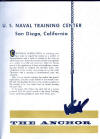
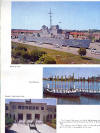
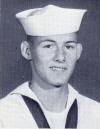
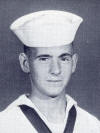
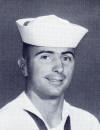
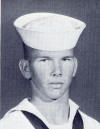
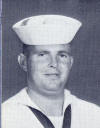
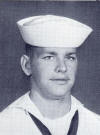
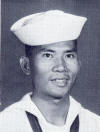
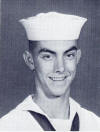
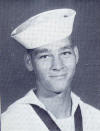
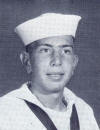
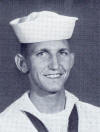
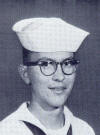
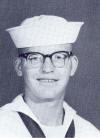
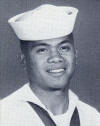
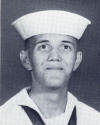
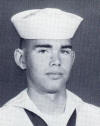
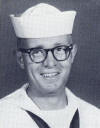
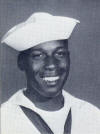
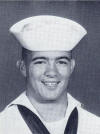
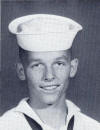
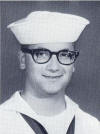
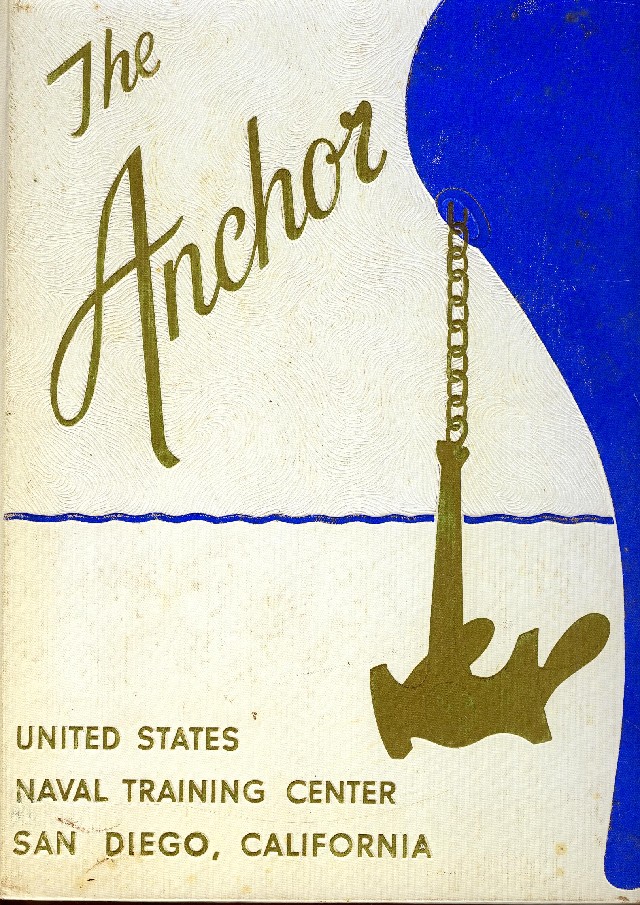
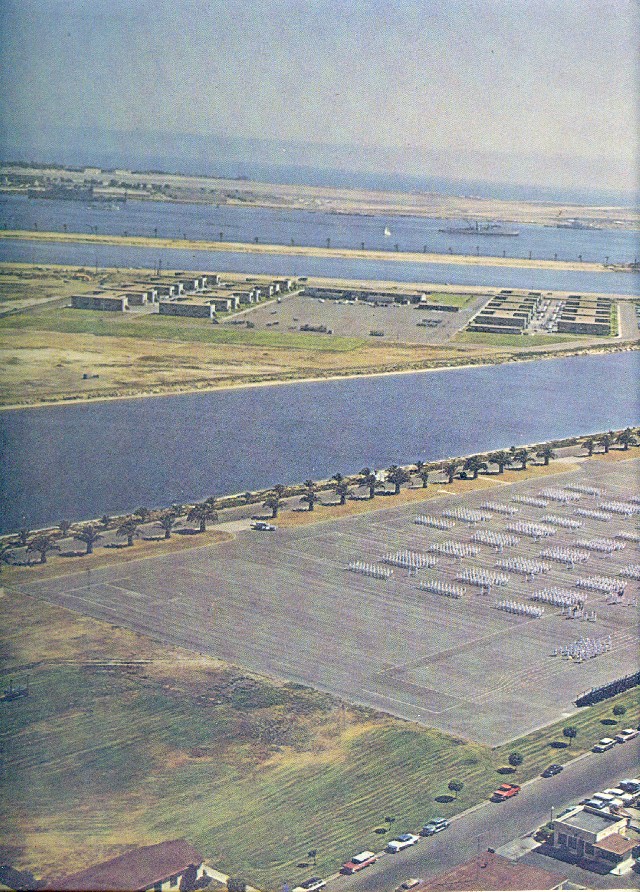
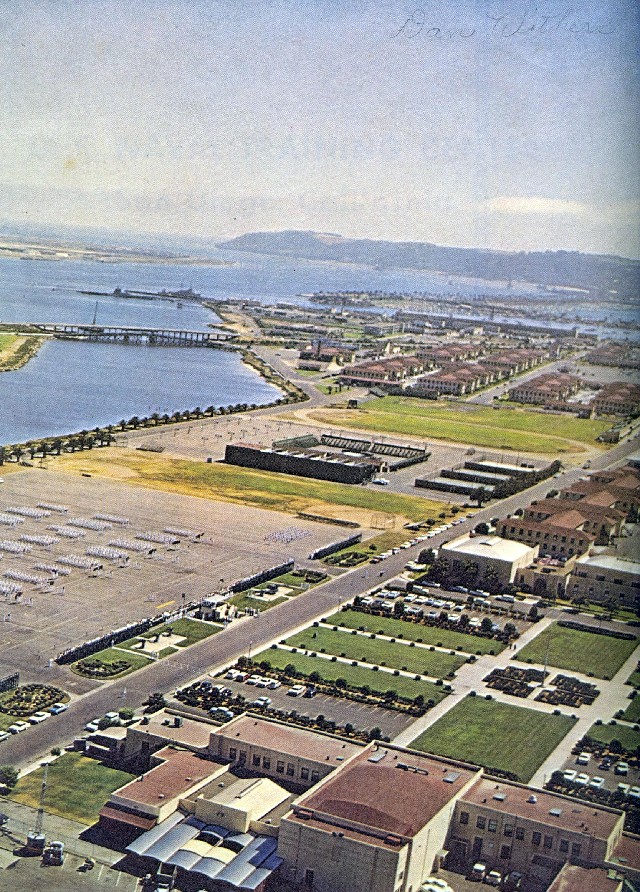
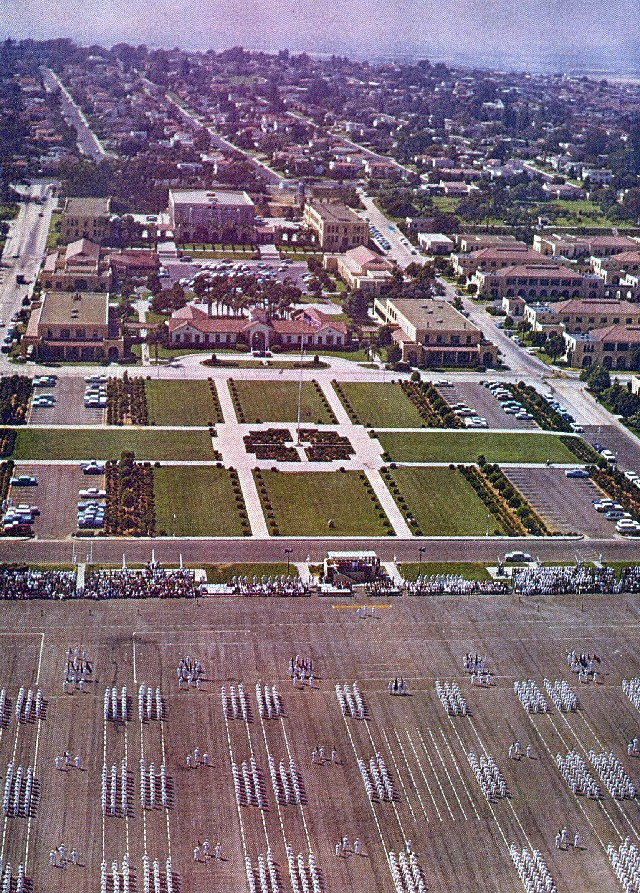
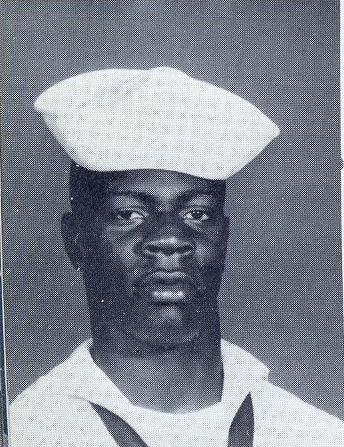
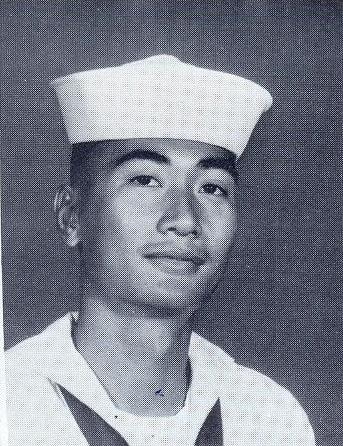
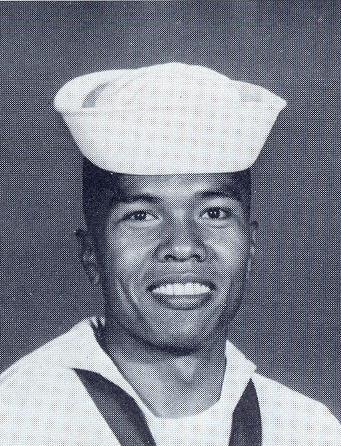
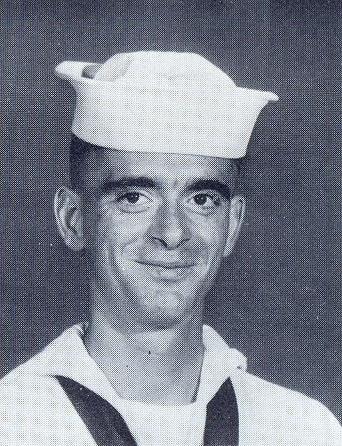
US Naval Training Center, San Diego, CA.

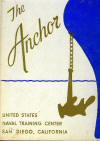
The Recruit Training Memory Book — "The Anchor"

Dan Withers
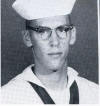
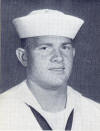
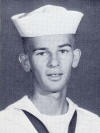
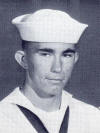
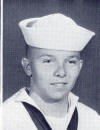
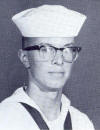
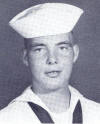
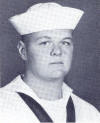
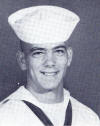
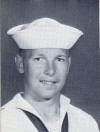
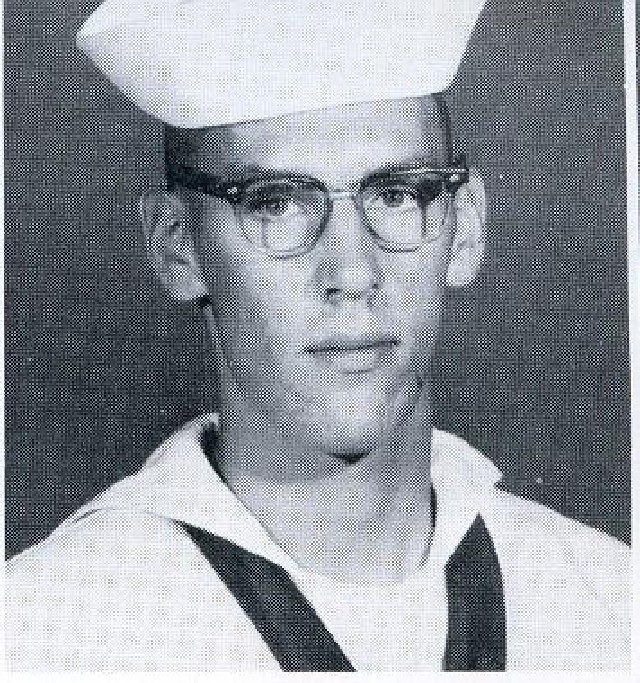
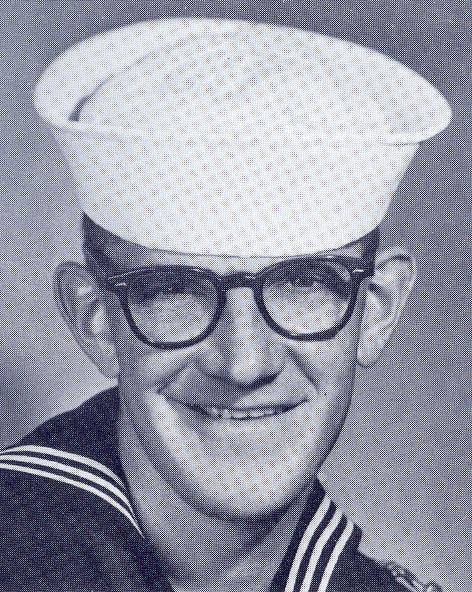
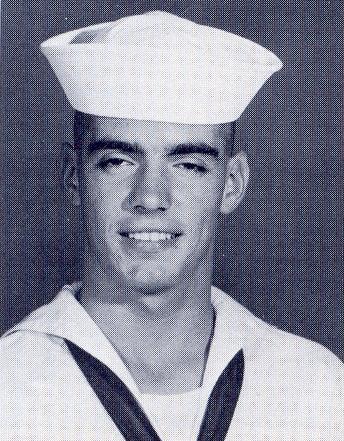
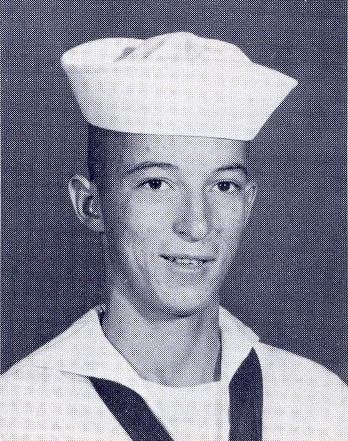
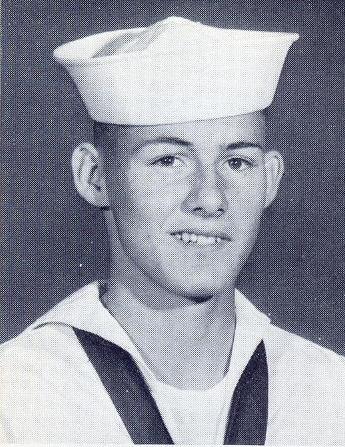
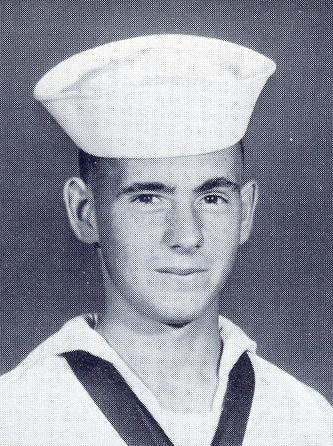
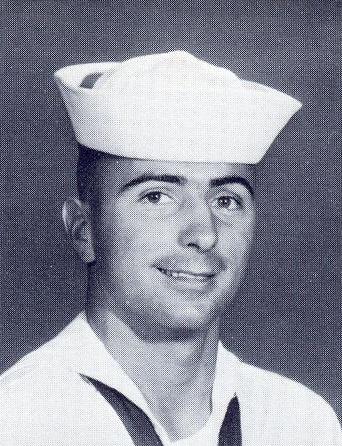
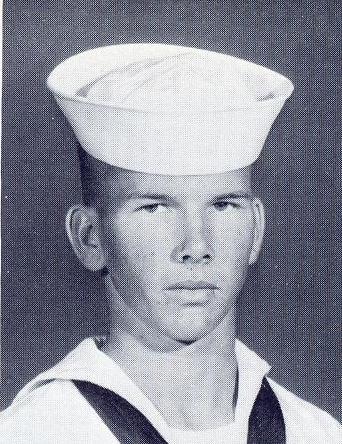
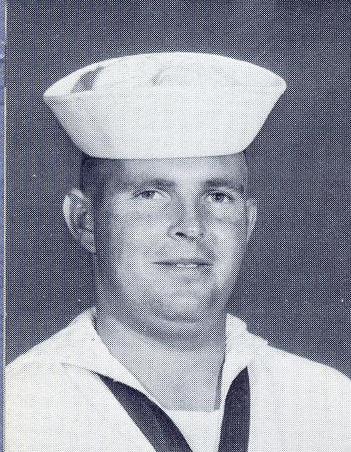
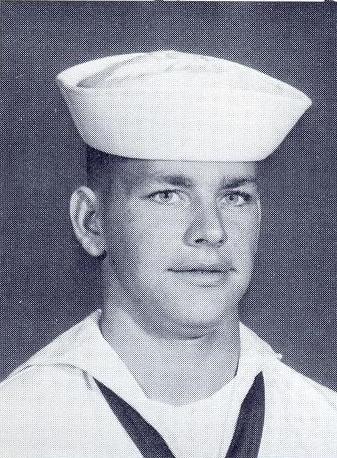
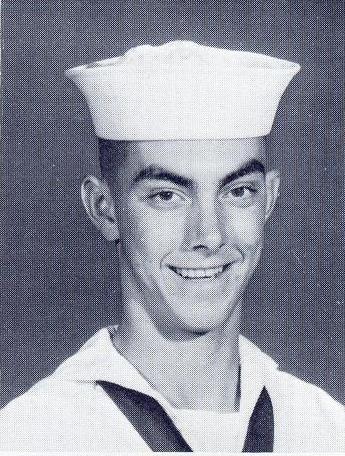
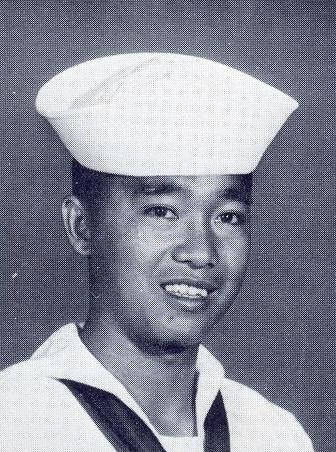
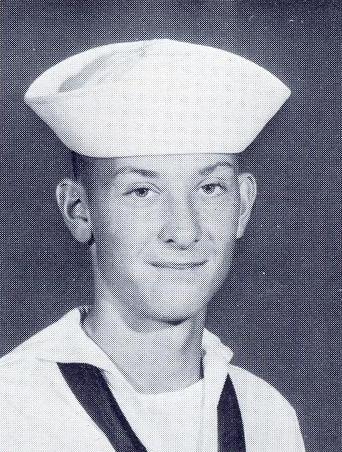
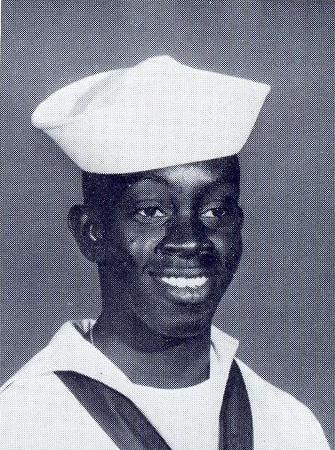
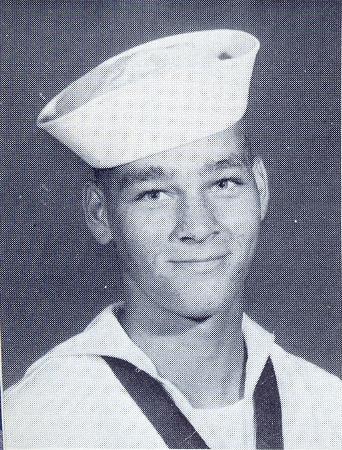
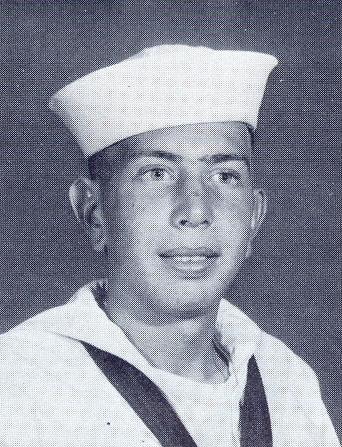
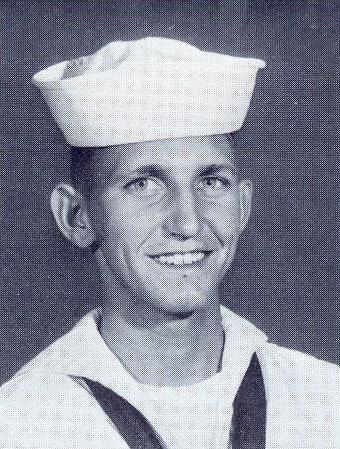
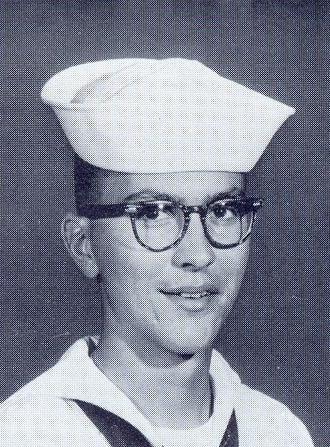
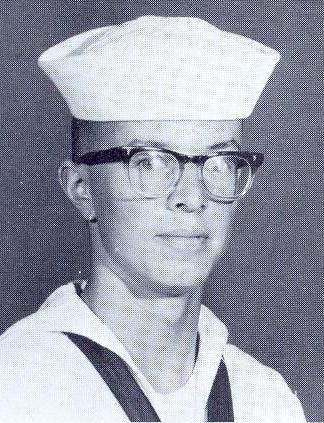
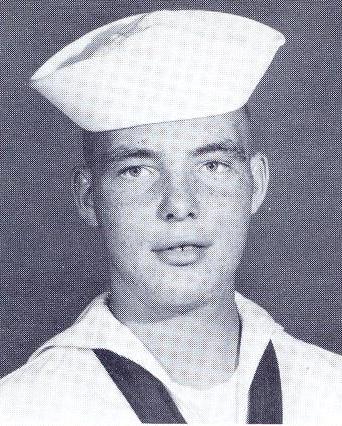
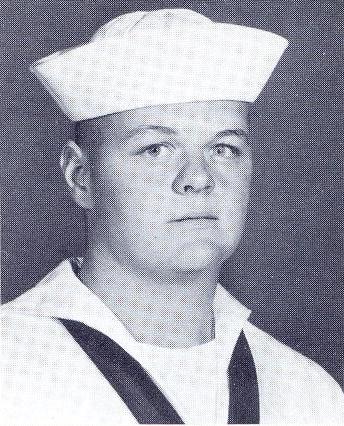
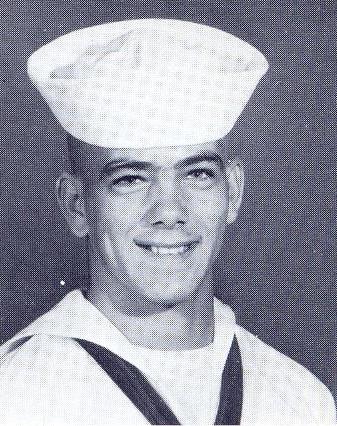
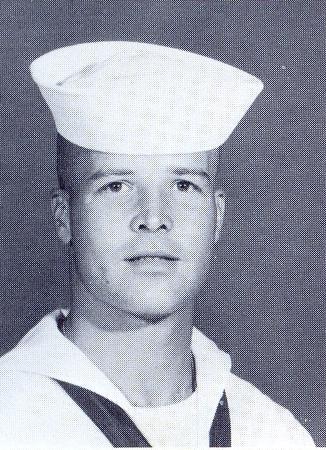
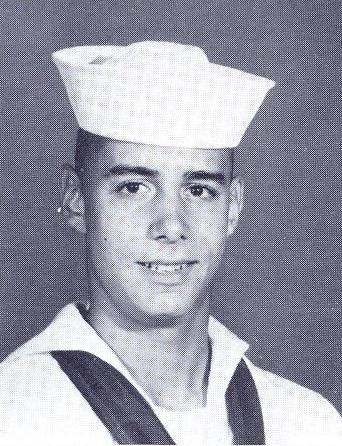
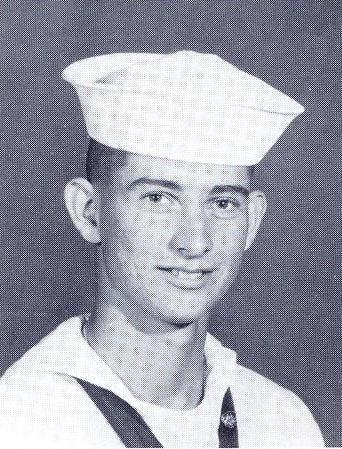
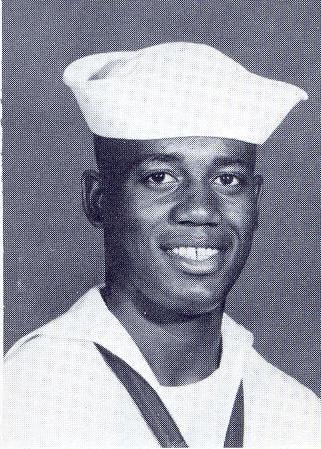
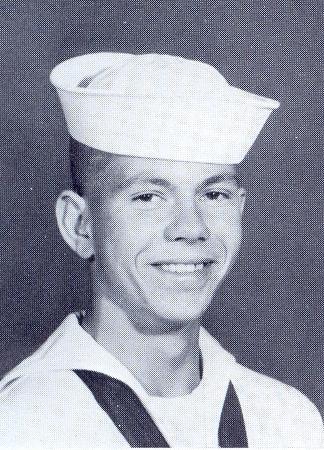
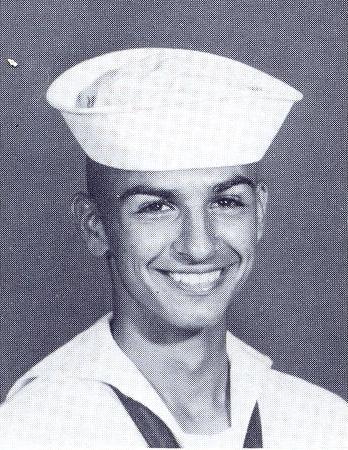
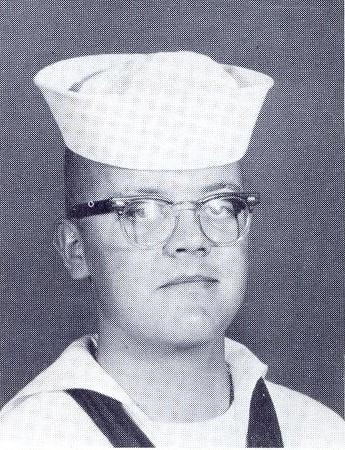
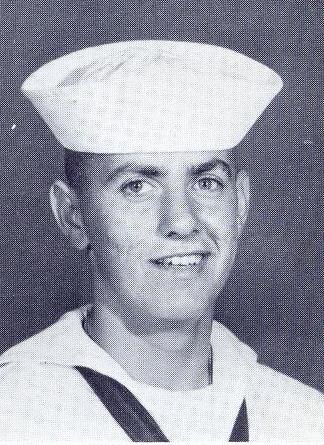
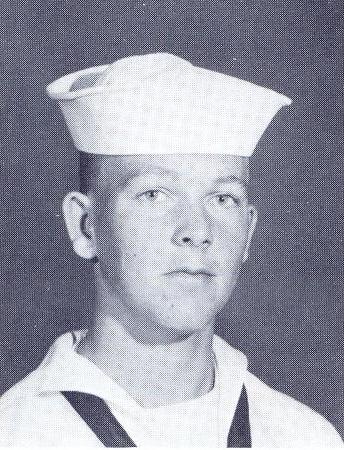
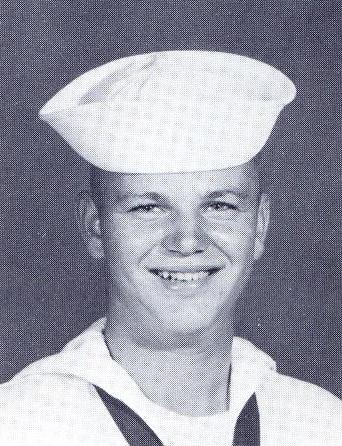
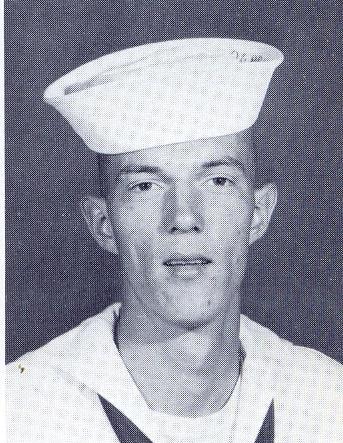
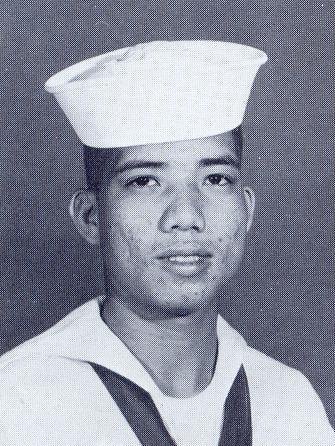
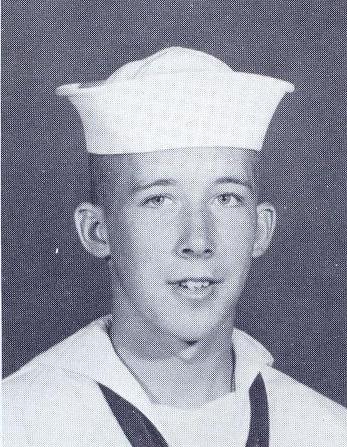
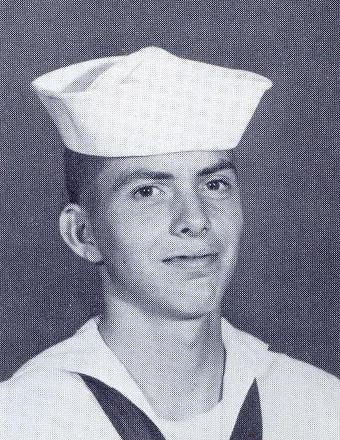
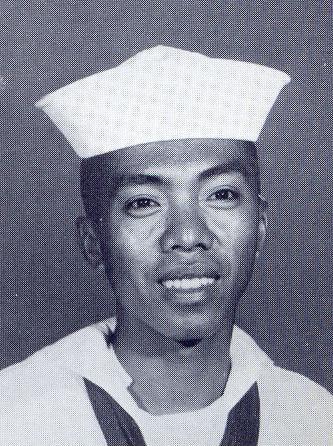
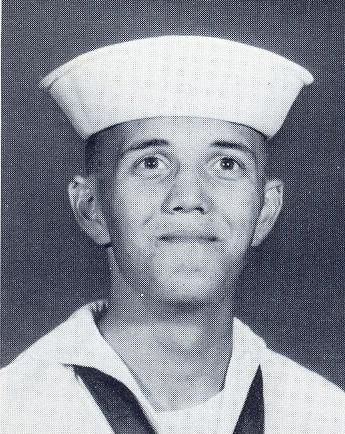
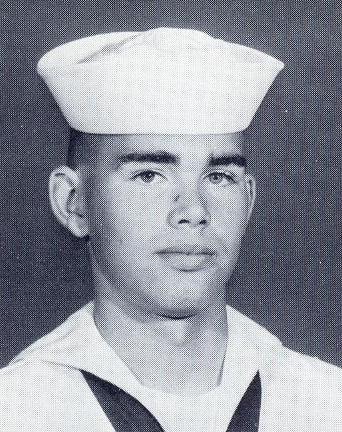
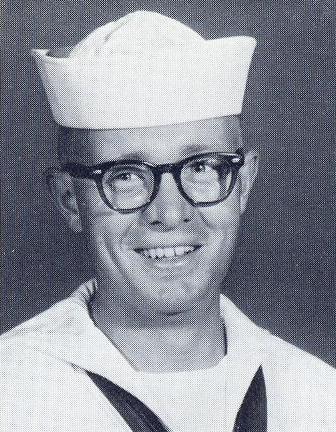
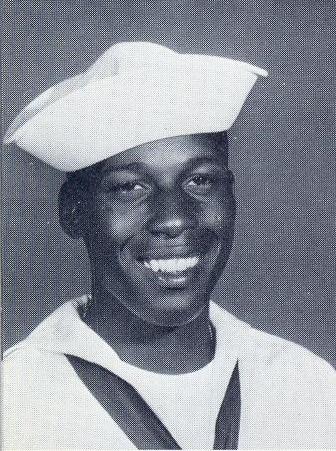
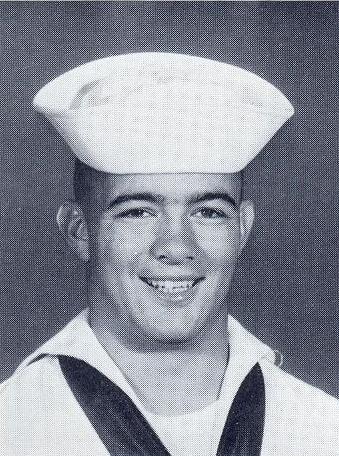
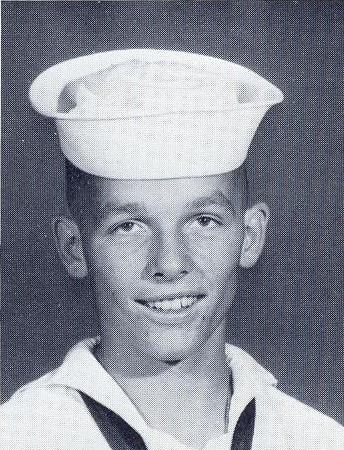
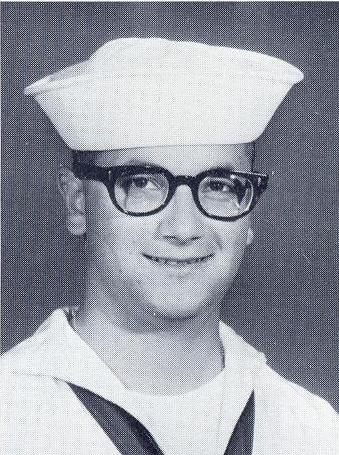
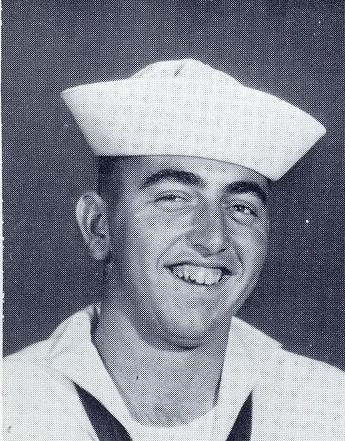
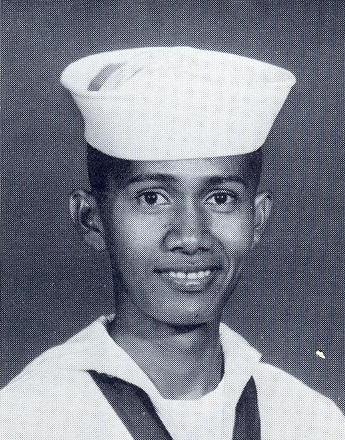
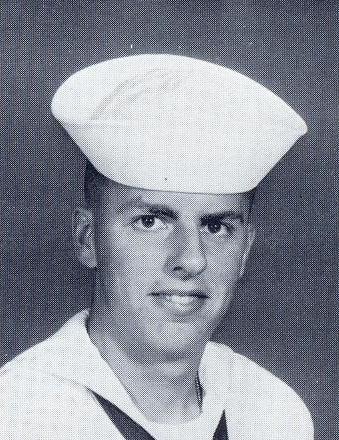
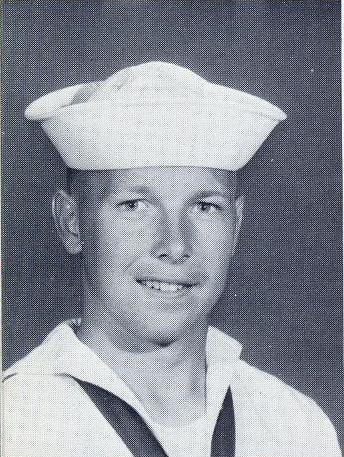
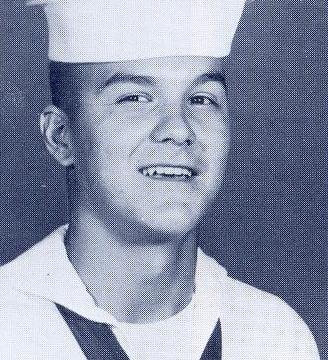
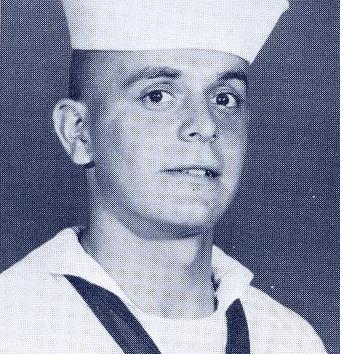
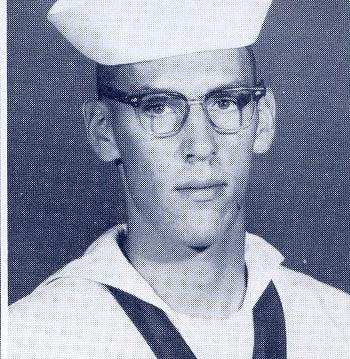
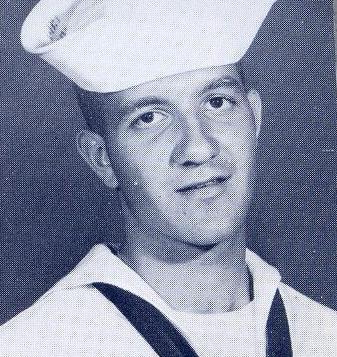
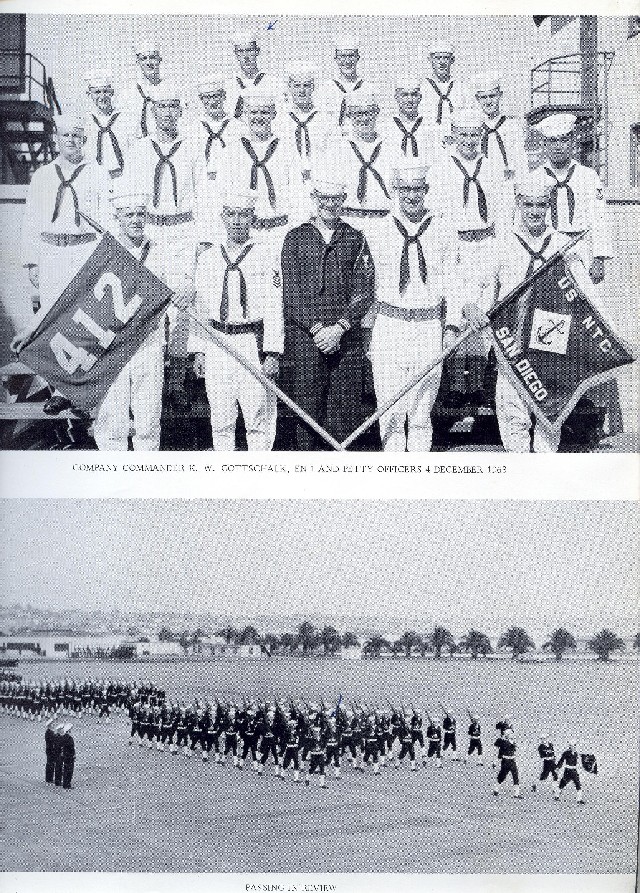
Your Webmaster, Dan Withers in Boot Camp, Company 412, September to December 1963.

There was a clear plastic 33 1/3 rpm record in the book. Here is that audio for playback.

Anchor Cover Back
Sounds of Boot Training - Cover
Generic Book Section
USER INFORMATION for this site. Click or Tap on the thumbnail image to get the larger version to show. Tap the larger version to return back to the small image and continue browsing. All content from the book is included, but some of it is laid out differently to expand its readability.
Cover
Cover
Inside Front Left
Inside Front Left
Inside Front Right
Inside Front Right
Introduction
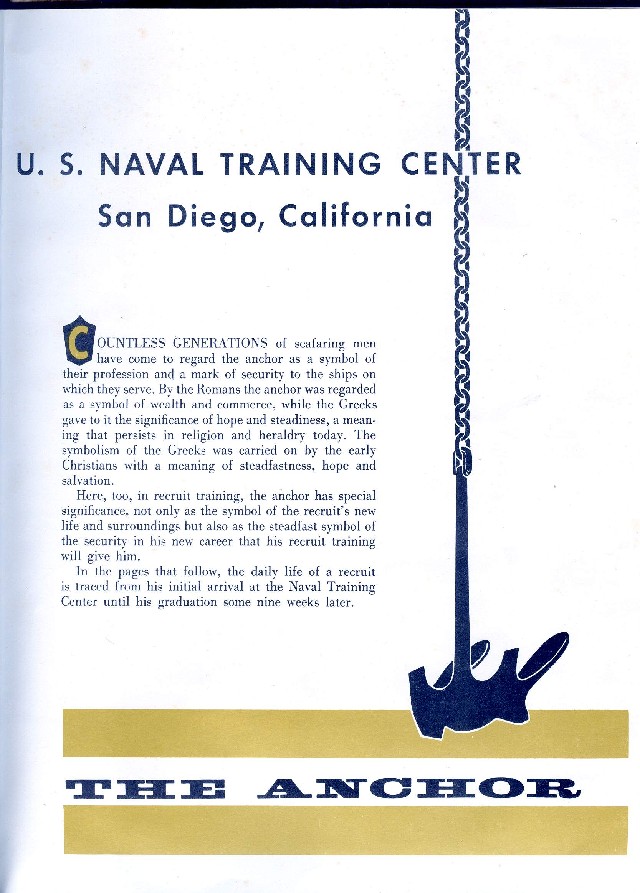
THE ANCHOR COUNTLESS GENERATIONS of seafaring men have come to regard the anchor as a symbol of their profession and a mark of security to the ships on which they serve. By the Romans the anchor was regarded as a symbol of wealth and commerce, while the Greeks gave to it the significance of hope and steadiness, a meaning that persists in religion and heraldry today. The symbolism of the Greeks was carried on by the early Christians with a meaning of steadfastness, hope and salvation. Here, too, in recruit training, the anchor has special significance, not only as the symbol of the recruit's new life and surroundings but also as the steadfast symbol of the security in his new career that his recruit training will give him. In the pages that follow, the daily life of a recruit is traced from his initial arrival at the Naval Training Center until his graduation some nine weeks later.
Introduction
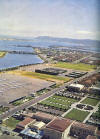
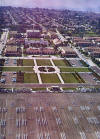
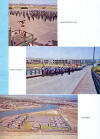
Base and Grinder
Inside Front Right
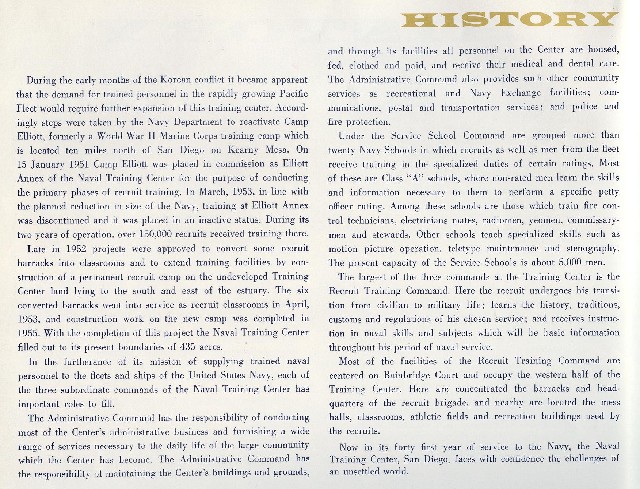
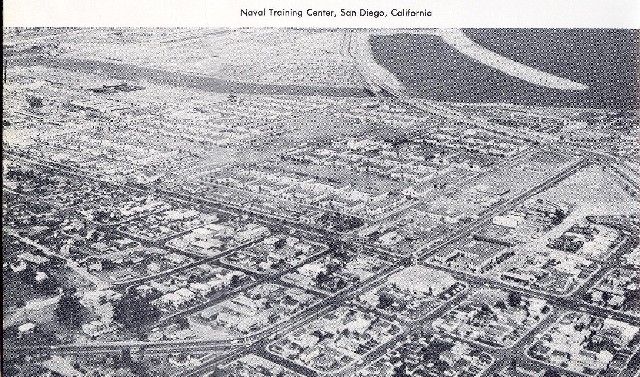
NTC (Part 1) THE NAVAL TRAINING CENTER, San Diego, had its inception in 1916 when Mr. William Kettner, Congressman from the Eleventh Congressional District of California and spokesman for the San Diego Chamber of Commerce, interested the Honorable Franklin D. Roosevelt, then Assistant Secretary of the Navy, in establishing a naval training activity on the shores of San Diego Bay. Due to the Nation's entry into World War I, further development of this plan was postponed until 1919, when Congress authorized acceptance by the Navy of the present site of the Training Center. The original grant consisted of 135 acres of highland donated by the San Diego Chamber of Commerce and 142 acres of tideland given by the City of San Diego. Construction work began in 1921, and on I June 1923 the U. S. Naval Training Station, San Diego, was placed in commission under the command of Captain (later Rear Admiral) David F. Sellers, U. S. Navy. At the time of its commissioning in 1923 the station bore little resemblance to its present size or arrangement. At that time Camp Paul Jones housed the entire population of the station and the maximum recruit strength was 1,500. The period of recruit training was then sixteen weeks. The shore line of San Diego Bay extended considerably further inland than at present, and the land now occupied by Preble Field, the North Athletic Area and Camp Far ragut was entirely under water. The recruit parade ground was located on the present site of the Public Works garage. During the 1920's the Recruit Receiving and Outgoing Units were housed in the Detention Unit, known as Camp Ingram, which consisted of a group of walled tents adjacent to the south boundary of Camp Paul Jones. Until Camp Lawrence was completed in 1936, recruits spent their first three weeks of training under canvas in this Detention Unit. In 1939 a construction program was commenced which within three years was to increase the capacity of the station four-fold. This expansion went hand in glove with a large scale program of harbor improvements by means of which the channel and anchorages in San Diego Bay were deepened and 130 acres of filled land were added to the eastern boundaries of the station. By 1941 Camp Luce had been completed, and the construction of Camps Mahan, Decatur, and Farragut was already well under way when the Japanese attacked Pearl Harbor. Virtually all this construction work was completed by September, 1942, when the capacity of the station had reached its wartime peak of 33,000 men, 25,000 of whom were recruits. The period of recruit training during World War Il varied between three weeks and seven weeks. In April, 1944, the Secretary of the Navy changed the status of the Training Station to that of a group command and redesignated it the U. S. Naval Training Center, San Diego. Under the Center Commander were established three subordinate commands: The Recruit Training Command, The Service School Command and the Administrative Command. The years immediately following World War II saw a considerable reduction in population of the Training Center despite a post-war expansion of the Service Schools, and by the end of 1949 the population of the Center had dropped to a twenty-year low of 5,800 men. Six months later, when the Communists invaded the Republic of Korea, an immediate expansion of all Naval training activities took place and by September of 1950 the Center was again operating at nearly full capacity.
Cover
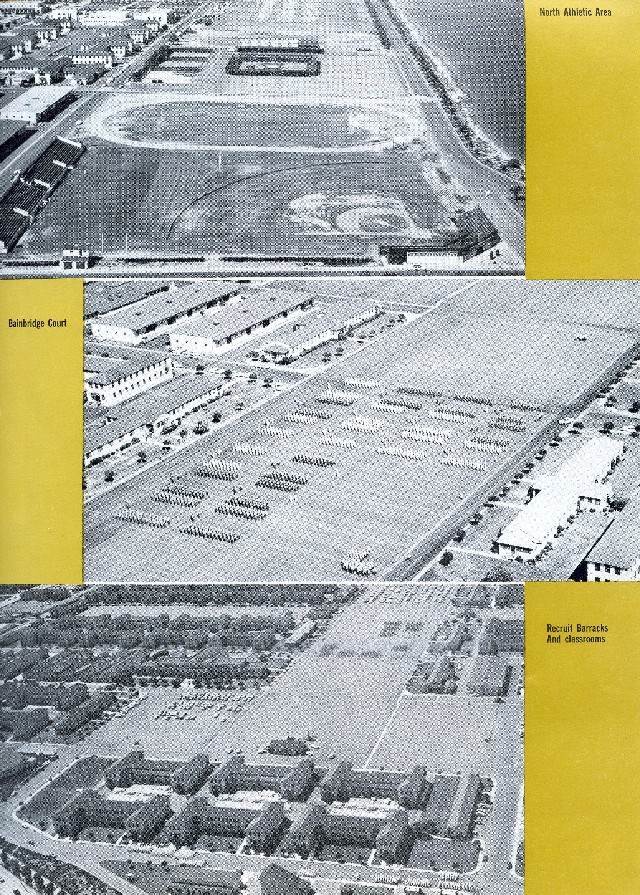
NTC (Part-2) During the early months of the Korean conflict it became apparent that the demand for trained personnel in the rapidly growing Pacific Fleet would require further expansion of this training center. Accordingly steps were taken by the Navy Department to reactivate Camp Elliott, formerly a World War Il Marine Corps training camp which is located ten miles north Of San Diego on Kearny Mesa. On 15 January 1951 Camp Elliott was placed in commission as Elliott Annex Of the Naval Training Center for the purpose of conducting the primary phases of recruit training. In March, 1953, in line with the planned reduction in size of the Navy, training at Elliott Annex was discontinued and it was placed in an inactive status. During its two years of operation, over 150,000 recruits received training there. Late in 1952 were approved to convert some recruit barracks into classrooms and to extend training facilities by construction of a permanent recruit camp on the undeveloped Training Center land lying to the south and east of the estuary. The six converted barracks went into service as recruit classrooms in April, 1953, and construction work on the new camp was completed in 1955. With the completion of this project the Naval Training Center filled out to its present boundaries of 435 acres. In the furtherance of its mission of supplying trained naval personnel to the fleets and ships of the United States Navy, each of the three subordinate commands of the Naval Training Center has important roles to fill.
Cover
NTC (Part-3) The Administrative Command has the responsibility of conducting most of the Center's administrative business and furnishing a wide range of services necessary to the daily life of the large community Which the Center has become. The Administrative Command has the responsibility of maintaining the Center's buildings and grounds, and through its facilities all personnel on the Center are housed, fed, clothed and paid, and receive their medical and dental care. The Administrative Command also provides such other community services as recreational and Navy Exchange facilities; communications, postal and transportation services; and police and fire protection. Under the Service School Command are grouped more than twenty Navy Schools in which recruits as well as men from the fleet receive training in the specialized duties of certain ratings. Most of these are Class "A" schools, where nonrated men learn the skill and information necessary to them to perform a specific petty officer rating. Among these schools are those which train fire control technicians, electricians mates, radiomen, yeomen, commissary men and stewards. Other schools teach specialized Skills such as motion picture operation, teletype maintenance and stenography. The present capacity of the Service Schools is about 5,000 men.
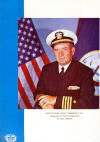
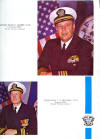
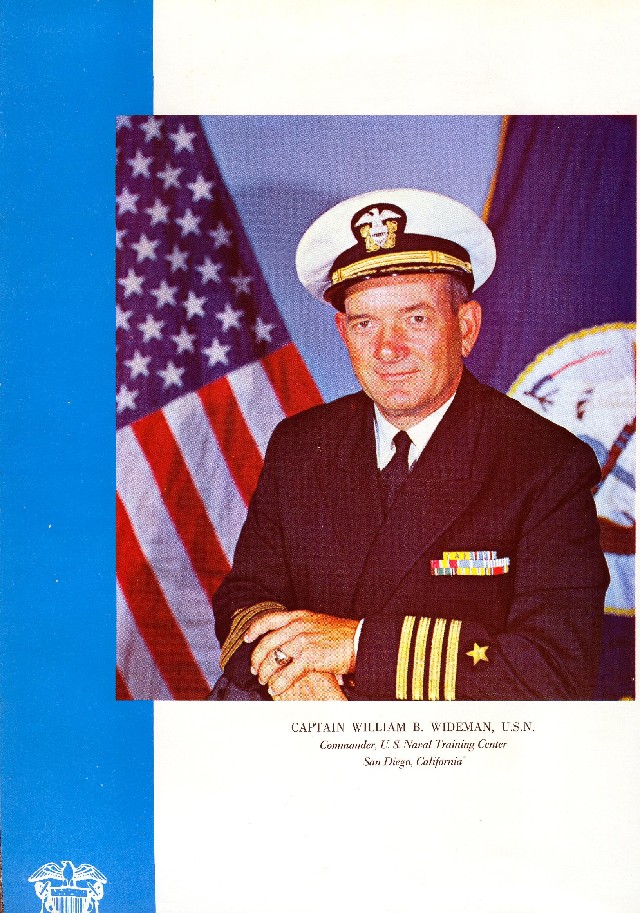
Capt. William B. Wideman
Capt. William B. Wideman, - Commander, U.S. Naval Training Center, San Diego, CA
History
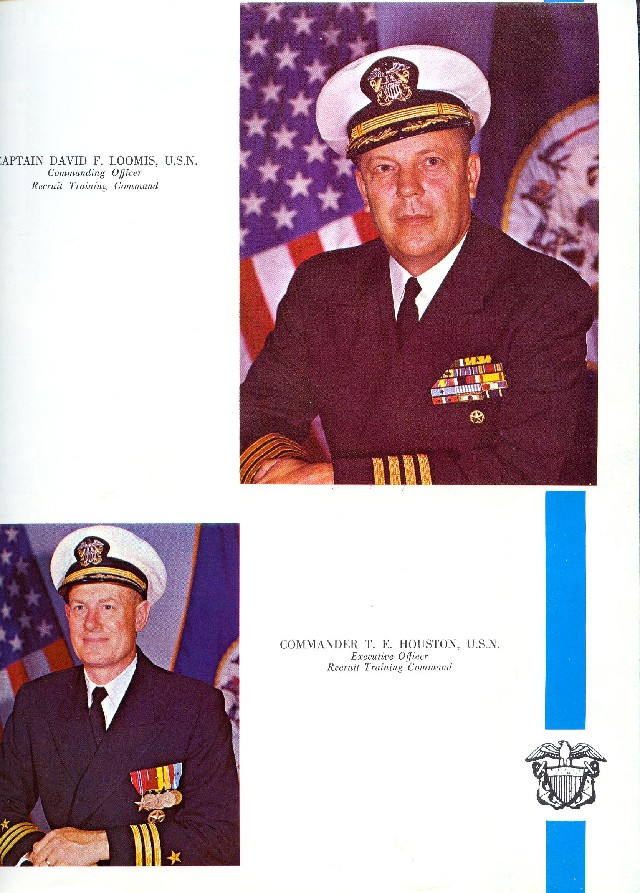
Captain David F Loomis , USN, Commanding Officer, Recruit Training Command.
History
Commander T.F. Houston, USN, Executive Officer, Recruit Training Command.
History
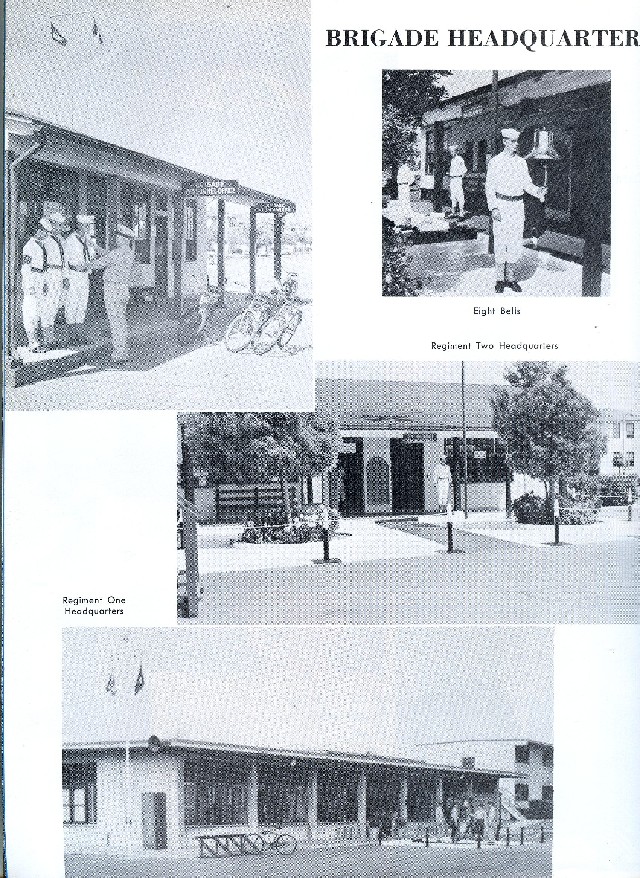
Brigade Headquarters
History
Brigade Headquarters
History
Brigade Headquarters
History
Brigade Headquarters
History
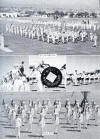
Drum and Bugle Corp
History
Drum and Bugle Corp
History
Drum and Bugle Corp
History
Drum and Bugle Corp
History
Drum and Bugle Corp
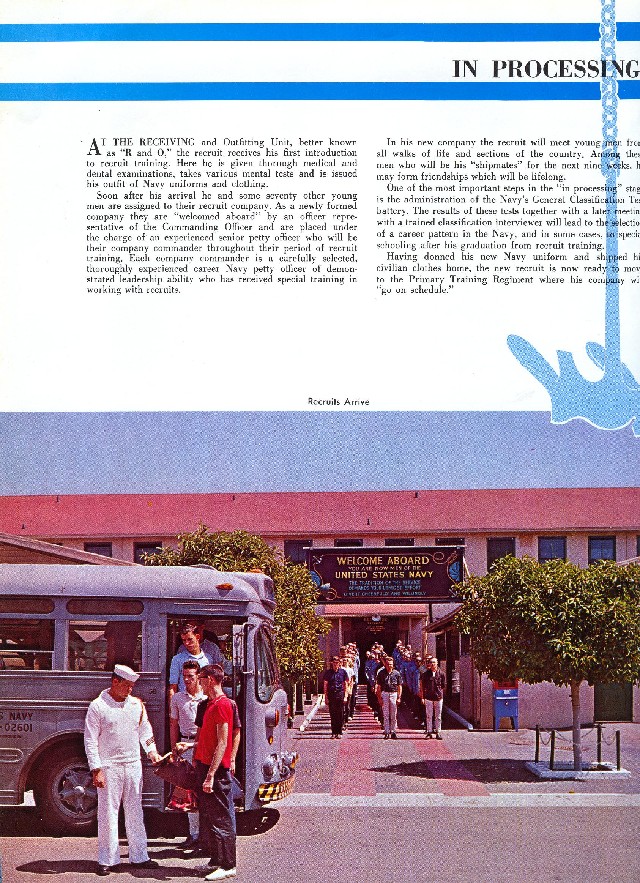
In Processing
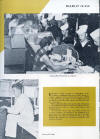
In Processing In his new company the recruit will meet young men from all walks of life and sections of the country. Among these men who will be his "shipmates" for the next nine weeks, he may form friendships which will be lifelong. "
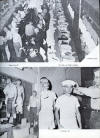
Haircut
First Haircut
History
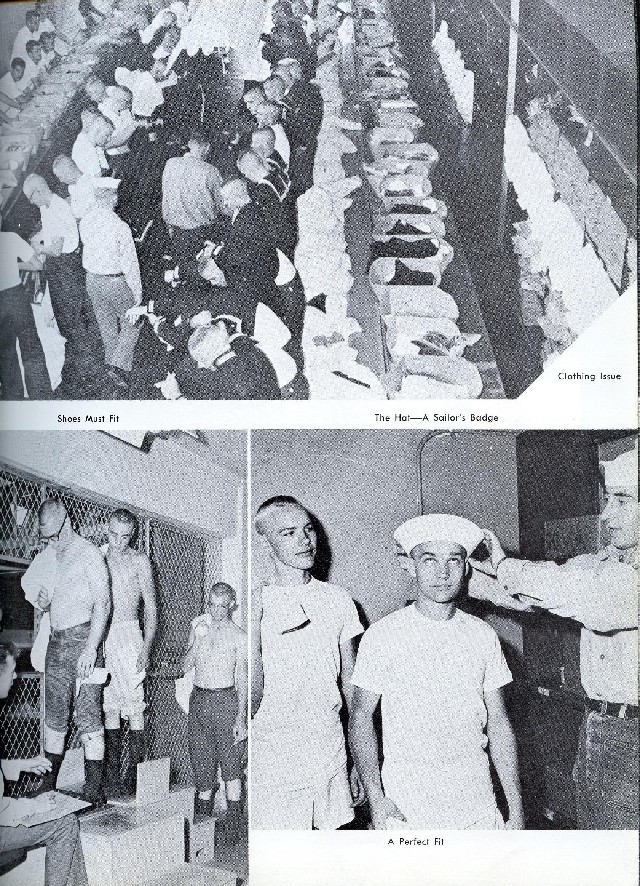
Clothing Issue - Having donned his new Navy uniform and shipped his civilian clothes home, the new recruit is now ready to move to the Primary Training Regiment where his company will "go on schedule.
Physical
Clothing Issue
Physical
Clothing Issue
History
Clothing Issue.
Physical
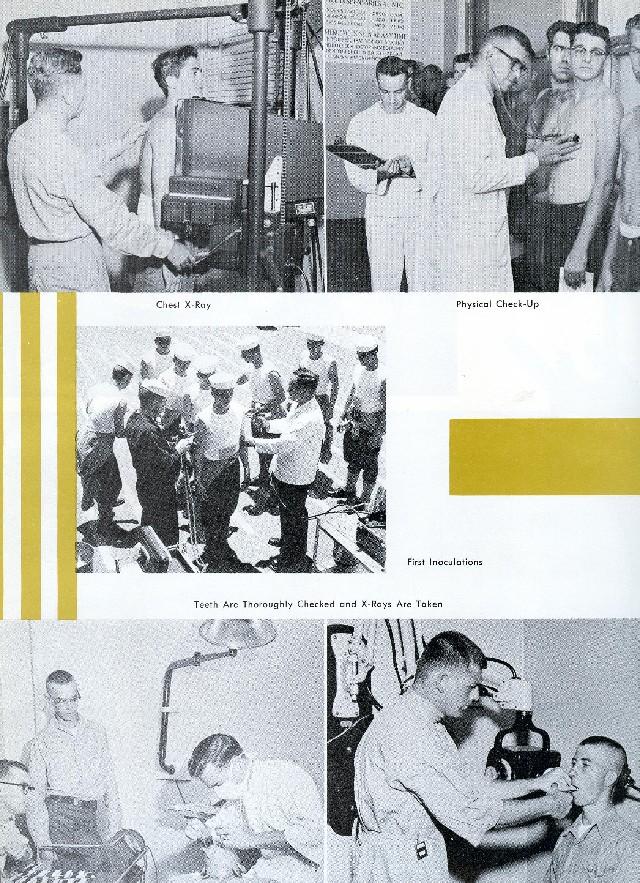
Chest X-Ray
Physical
Physical Checkup
Physical
Teeth are Checked
Physical
Teeth X-Rays are taken.
Physical
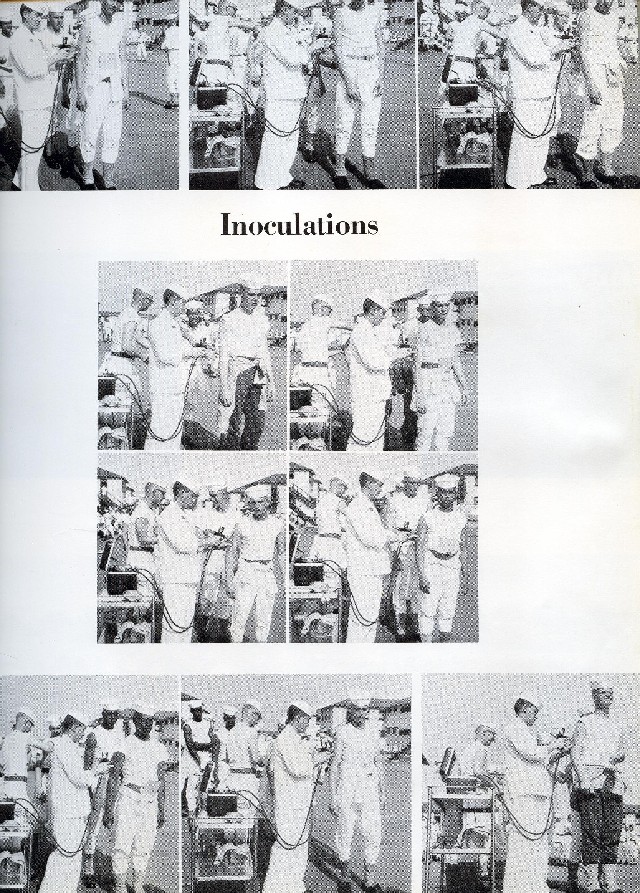
First Innoculations
History
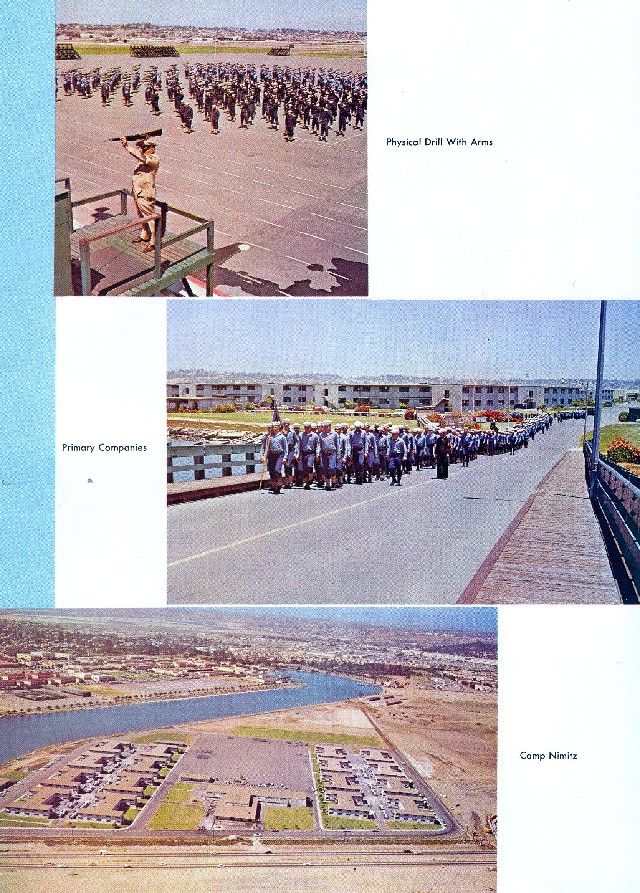
Physical Drill with Arms.
History
Primary Companies.
History
Camp Nimitz.
History
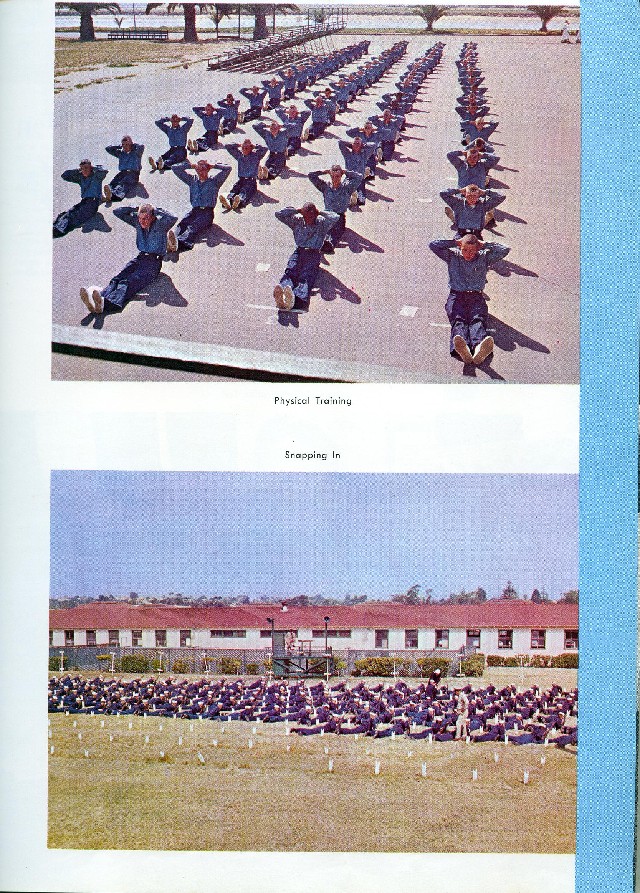
Physical Training.
History
Snapping In.
History
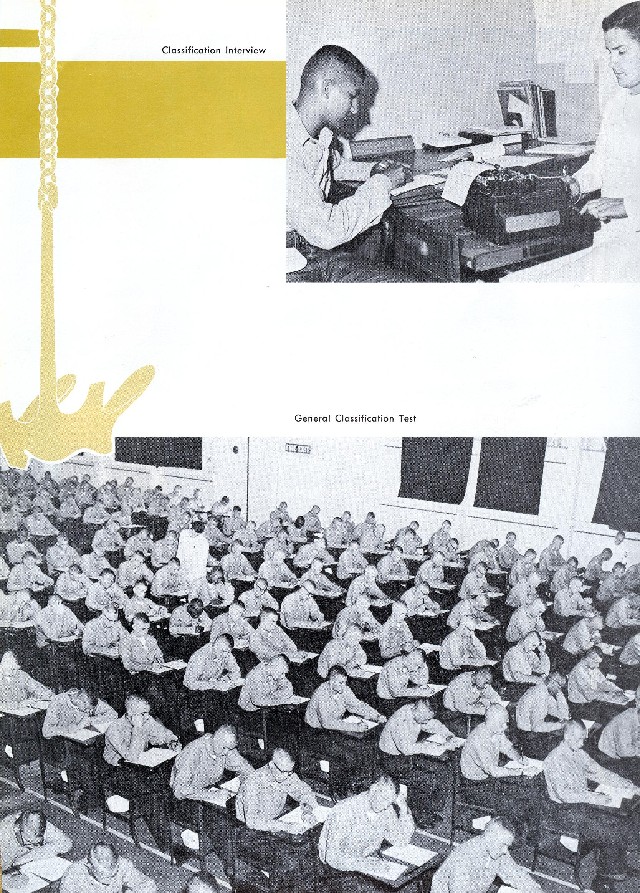
Classification - One of the most important steps in the '"in processing" stage is the administration of the Navy's General Classification Test battery.
History
Classification - Career Opportunities. The results of these tests together with a later meeting with a trained classification interviewer will lead to the selection of a career pattern in the Navy, and in some cases, to special schooling after his graduation from recruit training.
History
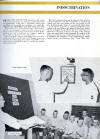
Indoctrination - Driving Etiquette HAVING LEFT CIVILIAN LIFE behind him, the recruit at once finds himself in unfamiliar surroundings where he is governed by a new code of regulations, where words and phrases have acquired new meanings, and where new obligations and responsibilities have been placed upon him. In the classrooms the recruit receives basic information on the rules and regulations by which he will be governed; the history, traditions and customs of the service of which he has become a part; and the privileges and obligations which he has assumed as a member of the naval service. Here, too, he gains a better understanding of the government of his nation and the role he plays in it. Through lecture and discussion he becomes more aware of his responsibilities as a citizen and the responsibilities that his country has assumed in the world of today. The Navy's rating structure and its system of career advancement are explained to him. He is taught how to recognize the various naval ranks and ratings and the opportunities he will have in attaining petty officer or commissioned officer status. As the recruit progresses in training and becomes more familiar with naval history, the names of Paul Jones, Preble, Decatur, Farragut, Nimitz, Halsey and other naval heroes in whose honor the camps, buildings and streets of the Training Center are named take on new meanings. By learning of the deeds of these heroes of our earlier naval history, there comes a realization and acceptance of the proud heritage carried forward by the man-of-warsman of the United States Navy.
History
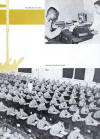
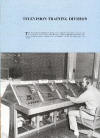
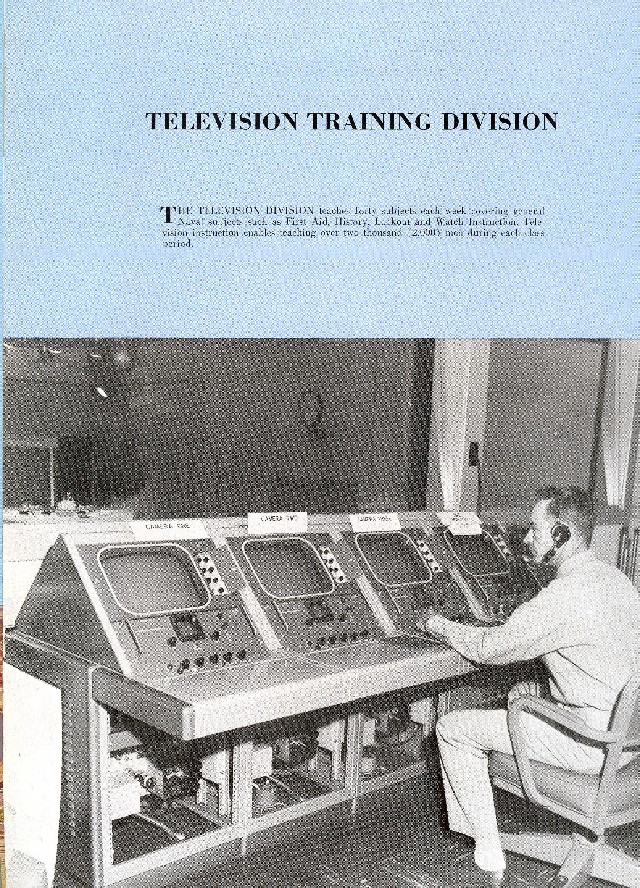
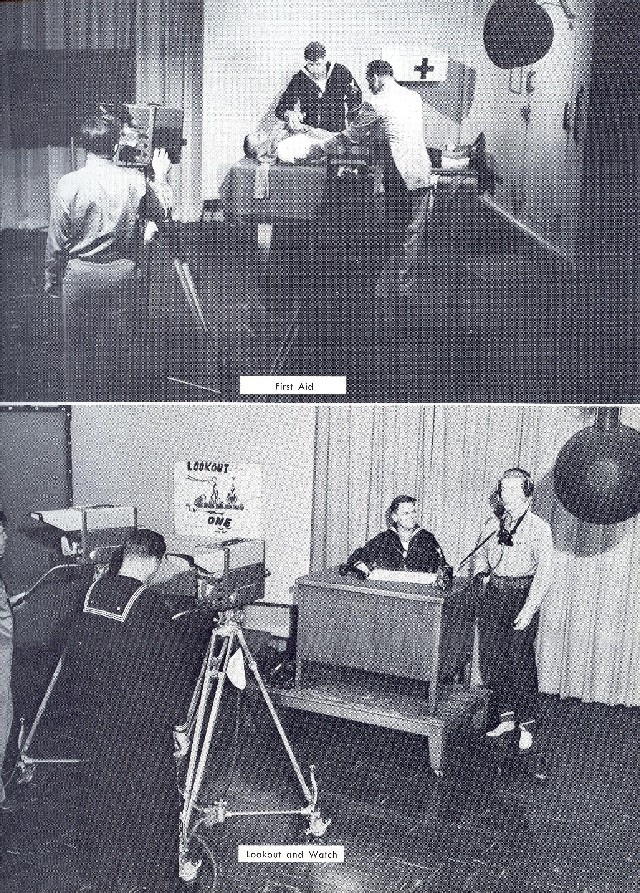
TV Training - THE TELEVISION DIVISION teaches forty subjects each week covering general Naval subjects such as First Aid, History, Lookout and Watch Instruction. Television instruction enables teaching over two thousand (2,000) men during each class period.
History
More TV Training - First Aid
History
More TV Training - Lookout and Watch
History
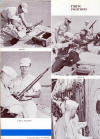
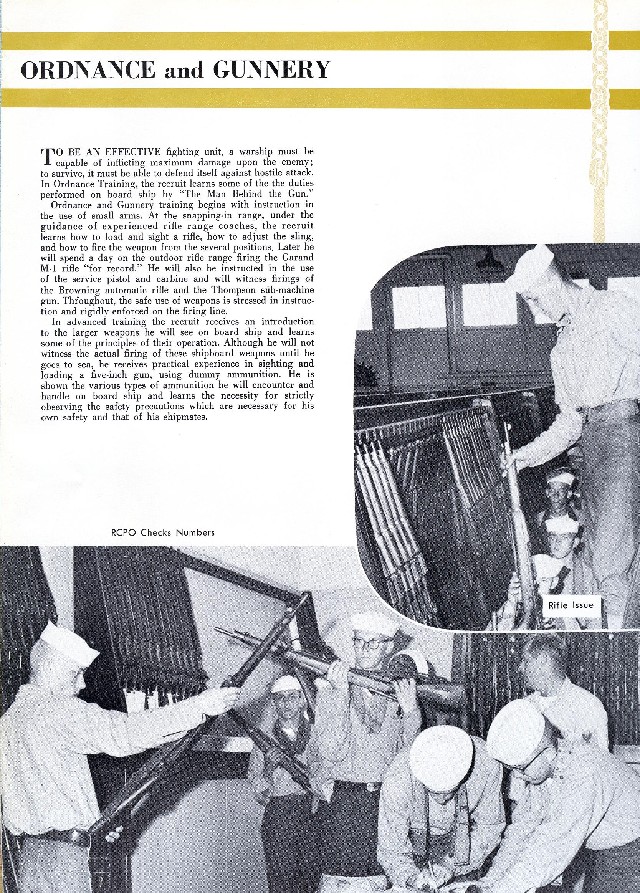
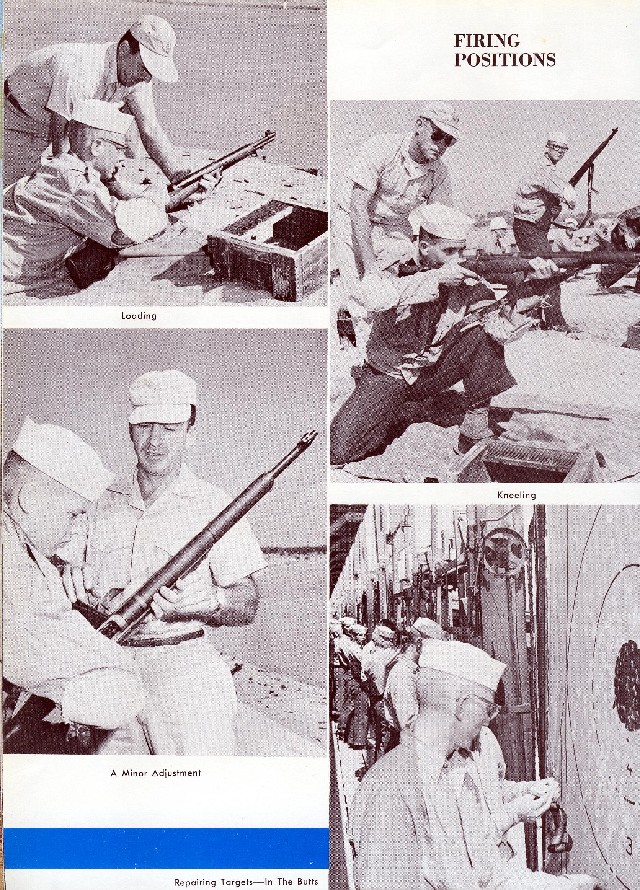
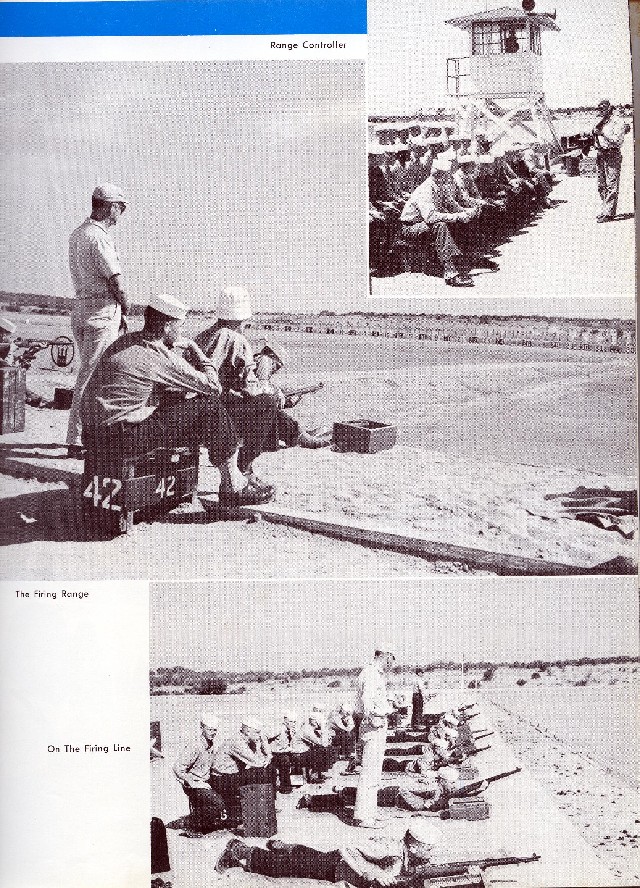
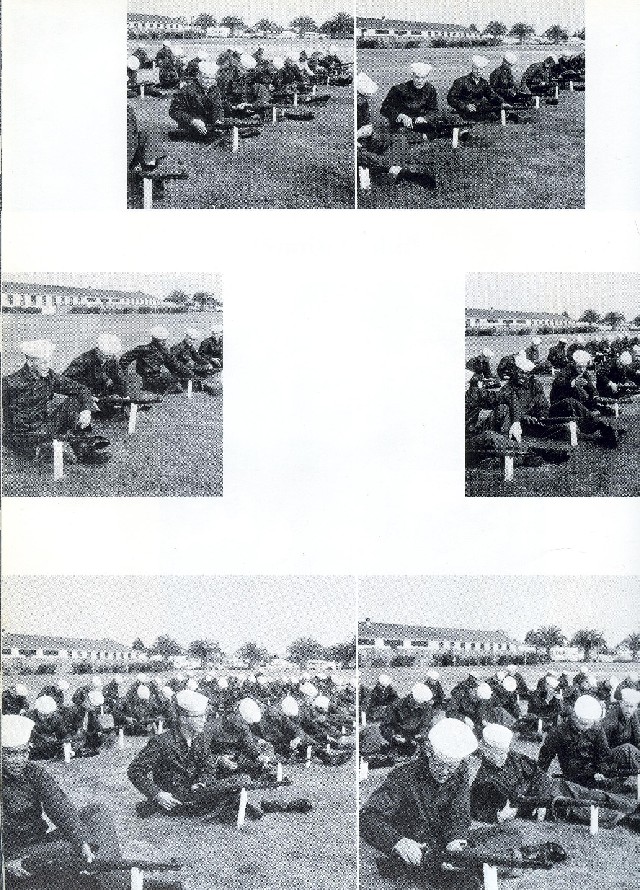
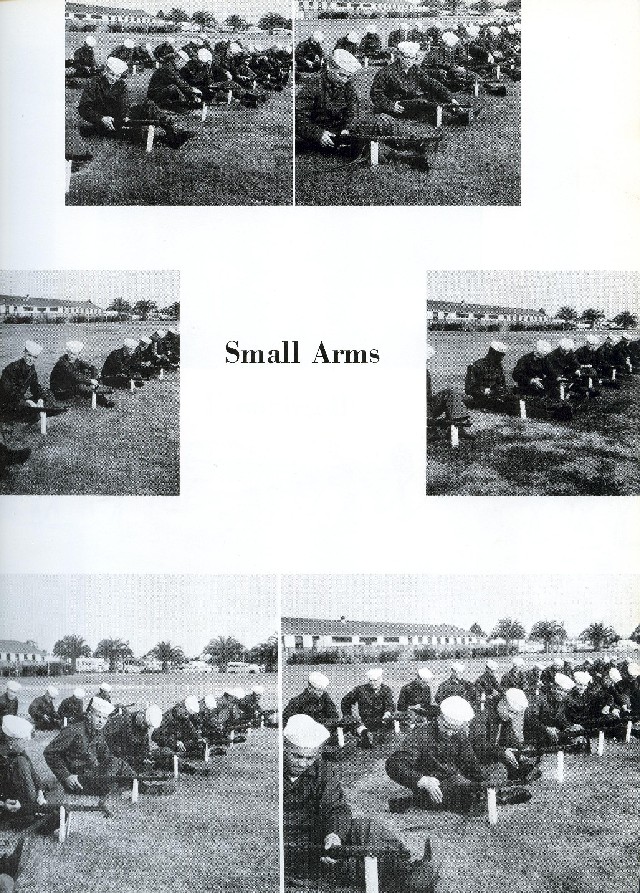
Ordnance & Gunnery - Rifle Issue TO BE AN EFFECTIVE fighting unit, a warship must be capable of inflicting maximum damage upon the enemy; to survive, it must be able to defend itself against hostile attack. In Ordnance Training, the recruit learns some of the duties performed on board ship by "The Man Behind the Gun." Ordnance and Gunnery training begins with instruction in the use of small arms. At the snapping-in range, under the guidance of experienced rifle range coaches, the recruit learns how to load and sight a rifle, how to adjust the sling, and how to fire the weapon from the several positions. Later he will spend a day on the outdoor rifle range firing the Garand M-1 rifle "for record."
History
Assigning the rifles 2
History
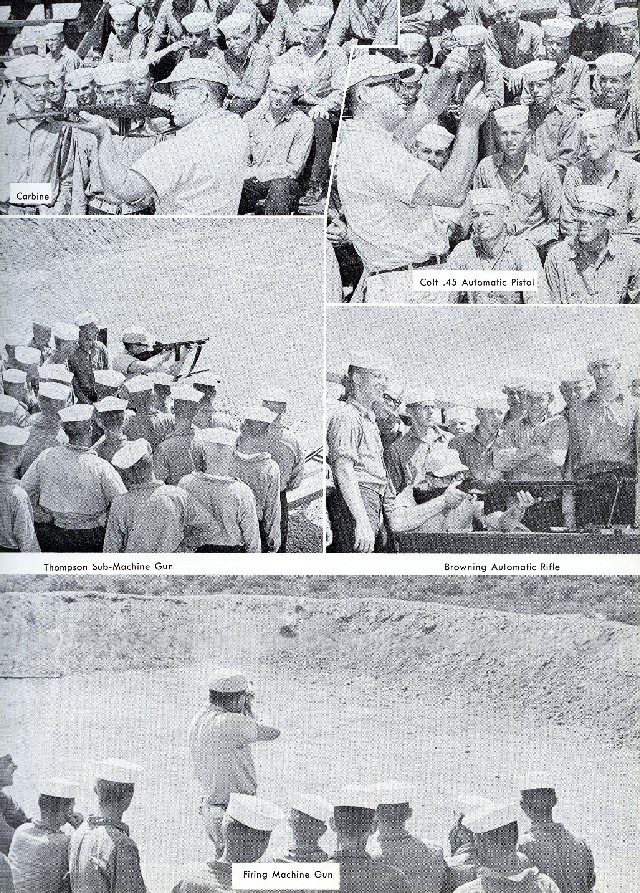
Demonstrating the Carbine 3 He will also be instructed in the use of the service pistol and carbine and will witness firings of the Browning automatic rifle and the Thompson sub-machine gun. Throughout, the safe use of weapons is stressed in instruction and rigidly enforced on the firing line, In advanced training the recruit receives an introduction to the larger weapons he will see on board ship and learns some of the principles of their operation. Although he will not witness the actual firing of these shipboard weapons until he goes to sea, he receives practical experience in sighting and loading a five-inch gun, using dummy ammunition. He is shown the various types of ammunition he will encounter and handle on board ship and learns the necessity for strictly observing the safety precautions which are necessary for his own safety and that of his shipmates.
History
Demonstrating the Colt 45 4
History
Demonstrating the Thompson Sub-Machine Gun
History
Demonstrating the Browning Automatic Rifle
History
Firing the Machne Gun. 7
History
Firing Range 1
History
Firing Range 2
History
Firing Range 3
History
Firing Range 4
History
Firing Range 5
History
Firing Range 6
History
Firing Range 7
History
Rifle Care 1
History
Rifle Care 2
History
Rifle Care 3
History
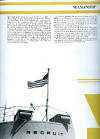
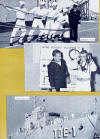
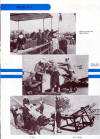
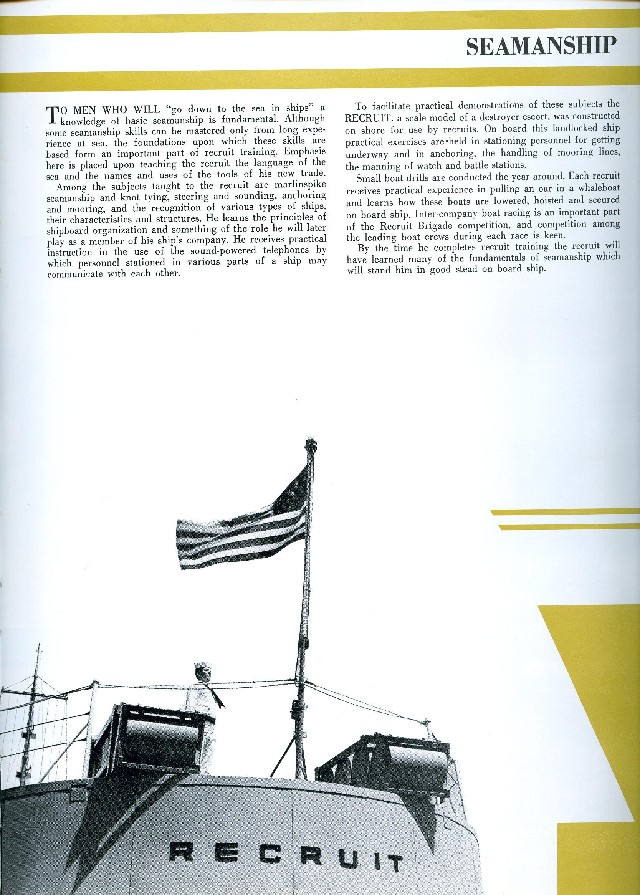
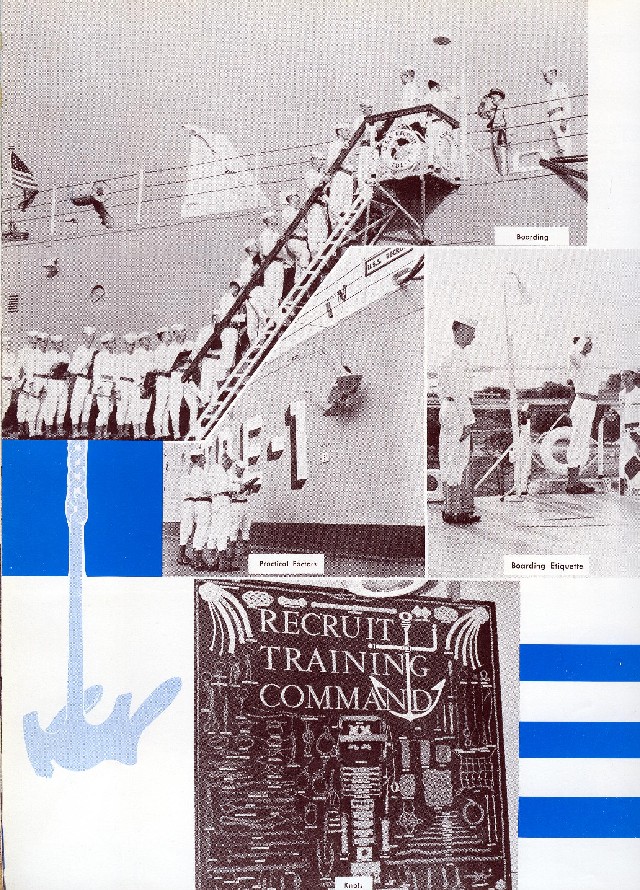
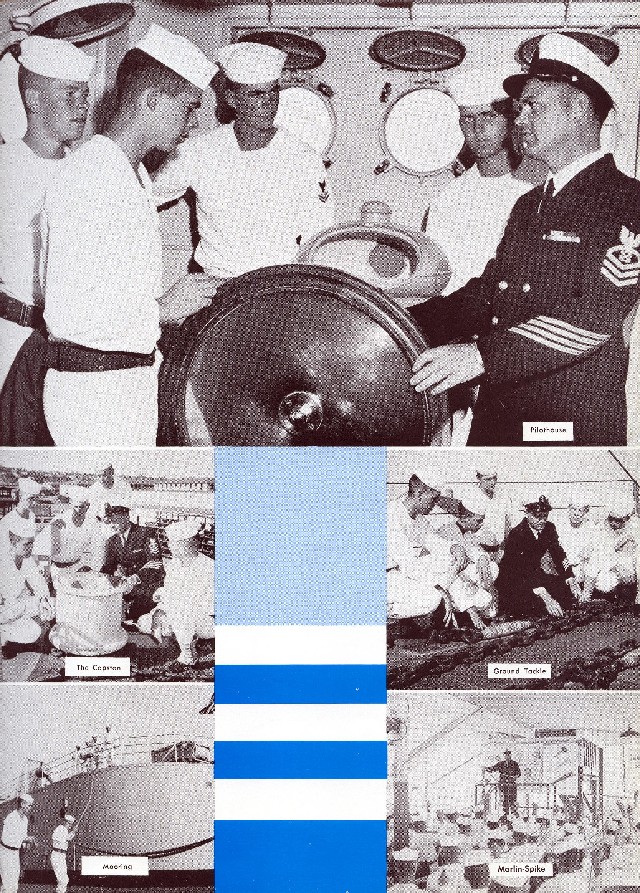
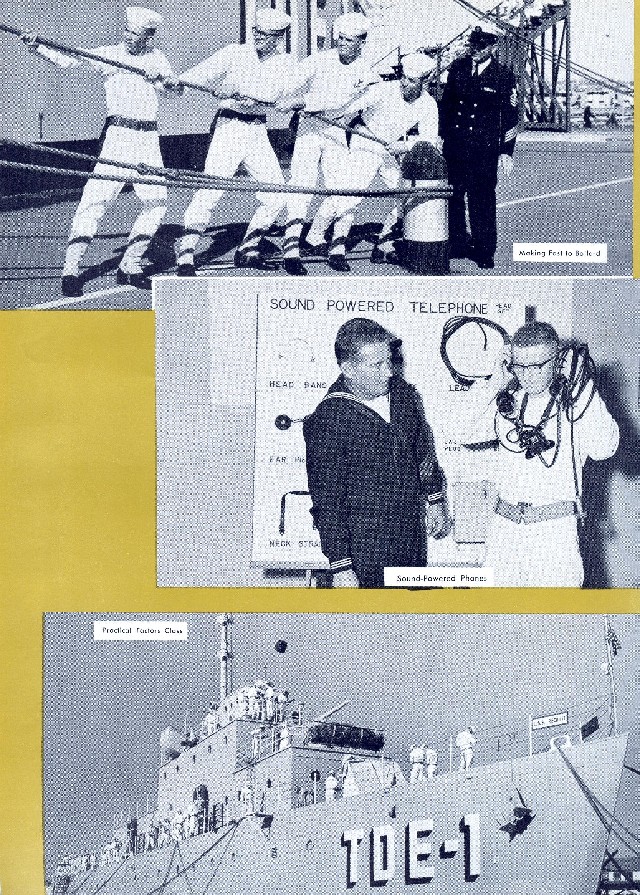
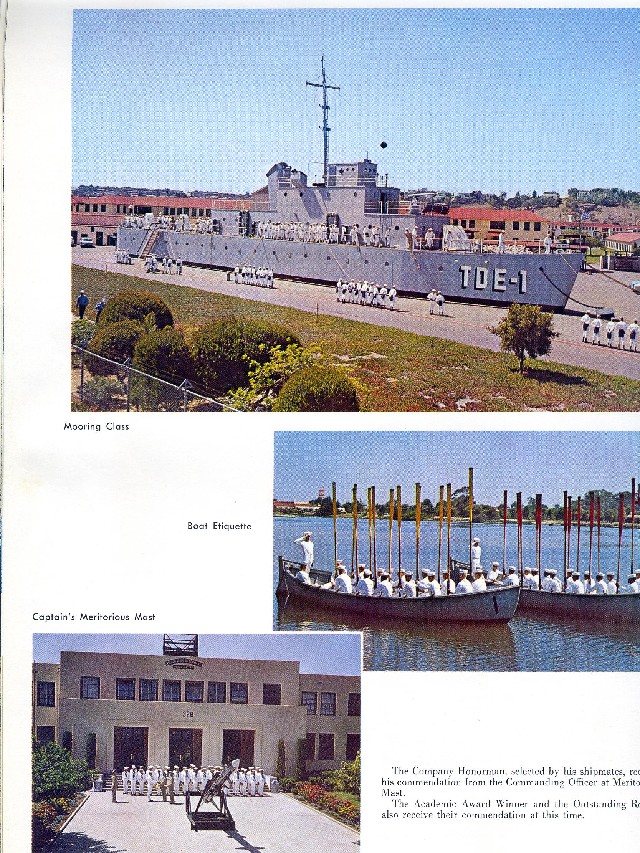
Seamanship Part 1 Seamanship - TO MEN WHO WILL "go down to the sea in ships" a knowledge of basic seamanship is fundamental. Although some seamanship skills can be mastered only from long experience at sea, the foundations upon which these skills are based form an important part of recruit training. Emphasis here is placed upon teaching the recruit the language of the sea and the names and uses of the tools of his new trade. Among the subjects taught to the recruit are marlinspike seamanship and knot tying, steering and sounding, anchoring and mooring, and the recognition of various types of ships, their characteristics and structures. He learns the principles of shipboard organization and something of the role he will later play as a member of his ship's company. He receives practical instruction in the use of the sound-powered telephones by which personnel stationed in various parts of a ship may communicate with each other.
History
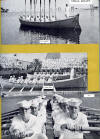
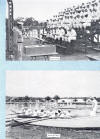
Boarding Part 1 To facilitate practical demonstrations of these subjects the RECRUIT, a scale model of a destroyer escort, was constructed on shore for use by recruits. On board this landlocked ship practical exercises are held in stationing personnel for getting underway and in anchoring, the handling of mooring lines, the manning of watch and battle stations. Small boat drills are conducted the year around. Each recruit receives practical experience in pulling an oar in a whaleboat and learns how these boats are lowered, hoisted and secured on board ship. Inter-company boat racing is an important part of the Recruit Brigade competition, and competition among the leading boat crews during each race is keen. By the time he completes recruit training the recruit will have learned many of the fundamentals of seamanship which will stand him in good stead on board ship.
History
Boarding2
History
Boarding3
History
Boarding4
History
Boarding5
History
Boarding6
History
Boarding7
History
Boarding8
History
Practical Factors1
History
Practical Factors2
History
Practical Factors3
History
Small boat1
History
Small boat2
History
Small boat3
History
Cargo4 Handling
History
Cargo5 Handling
History
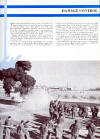
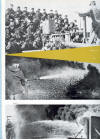
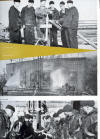
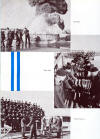
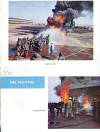
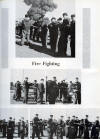
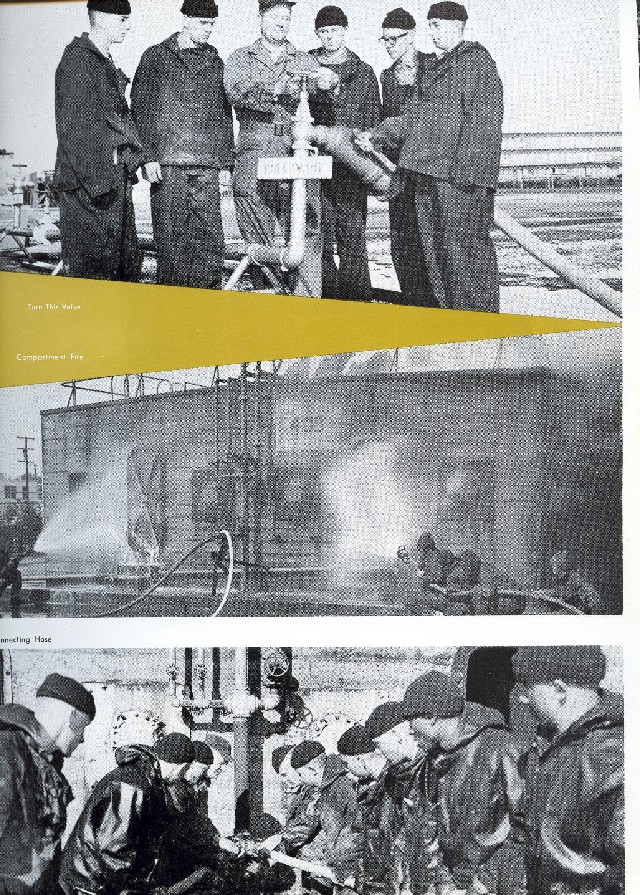
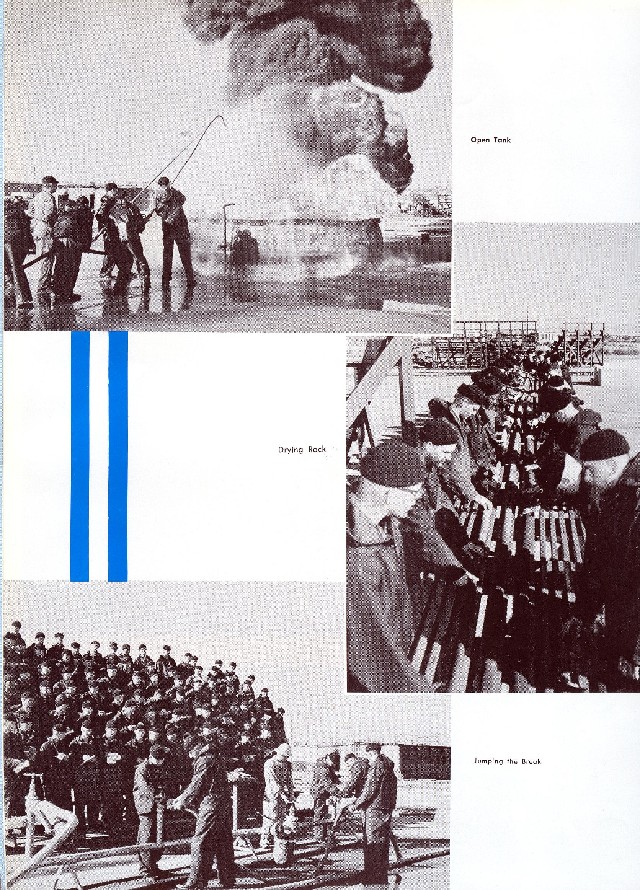
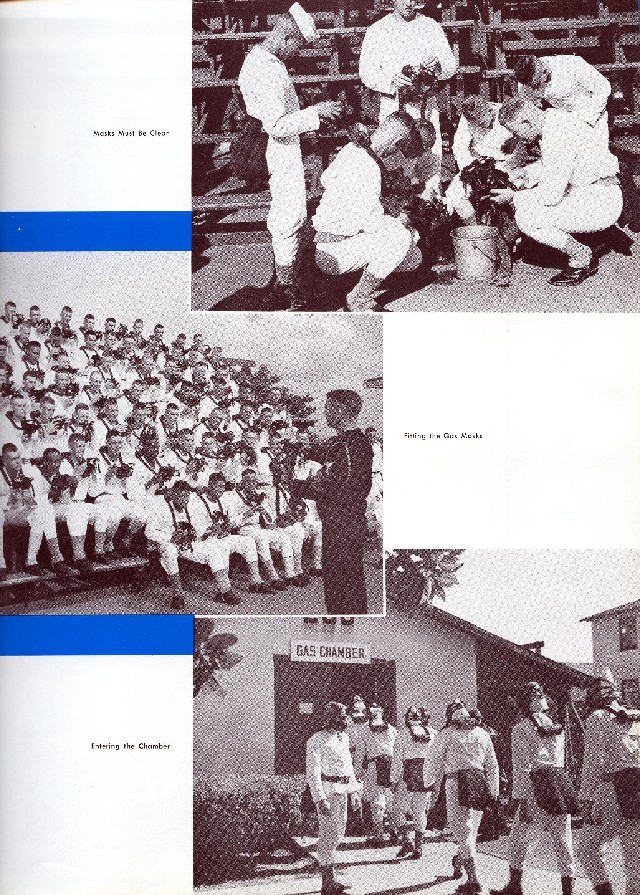
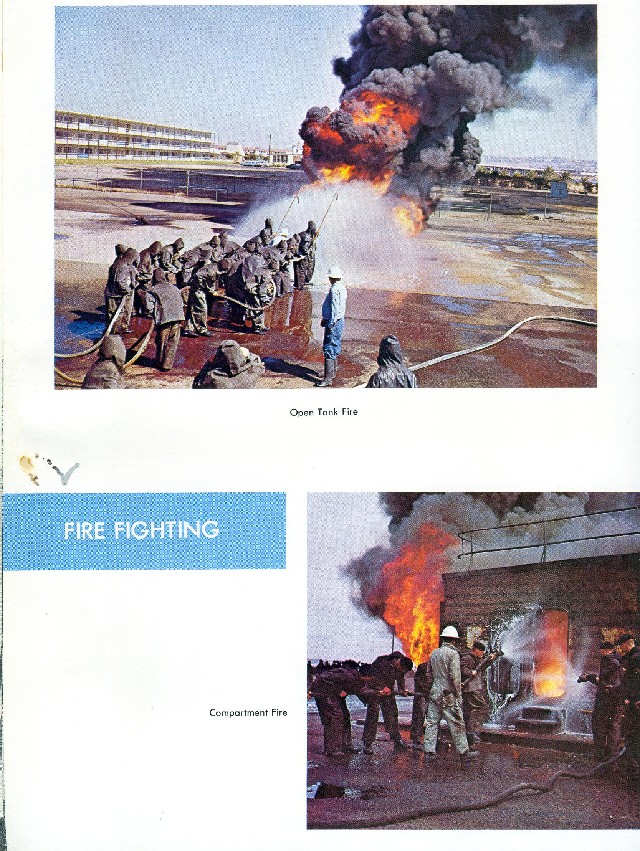
Damage Control THE PAGES OF HISTORY of World War II are filled with instances where brave men, given the proper equipment and the necessary "know how," were able to save their ships from apparently certain loss following severe battle damage. Fires were extinguished, flooded compartments plugged and dewatered, and the wounded cared for, to the end that the ship survived and returned to fight other battles. Damage Control instruction for the recruit is designed to teach him the fundamental principles of fire fighting and a working knowledge of the equipment which may save his ship and his own life. Probably one of the longest remembered days of recruit training is the one spent at the Fire Fighting Center. Here the recruit learns the chemistry of fire, basic principles of combating fire, and then spends nearly an entire day extinguishing actual fires. Under watchful supervision of trained firefighters he will put out serious fires under simulated shipboard conditions. After receiving this valuable practical experience he will have lost most of his fear of fire and will have gained confidence in his ability to combat serious fires. The recruit also receives practical instruction in the use of the gas mask, oxygen breathing apparatus and other equipment designed for his personal protection. In the tear gas chamber he has the opportunity to test the effectiveness of his gas mask. Basic instruction is also given to each recruit in the probable effects of an atomic explosion and the measures he should take to insure his personal safety and survival.
History
Emergency Pump
History
Foam application
History
Open Pit
History
Firefighting - Turn this valve.
History
Compartment fire.
History
Connecting the hose.
History
Open Tank.
History
Drying Rack.
History
Jumping the break.
History
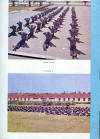
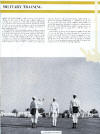
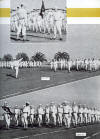
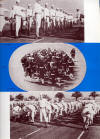
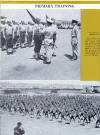
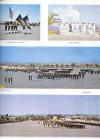
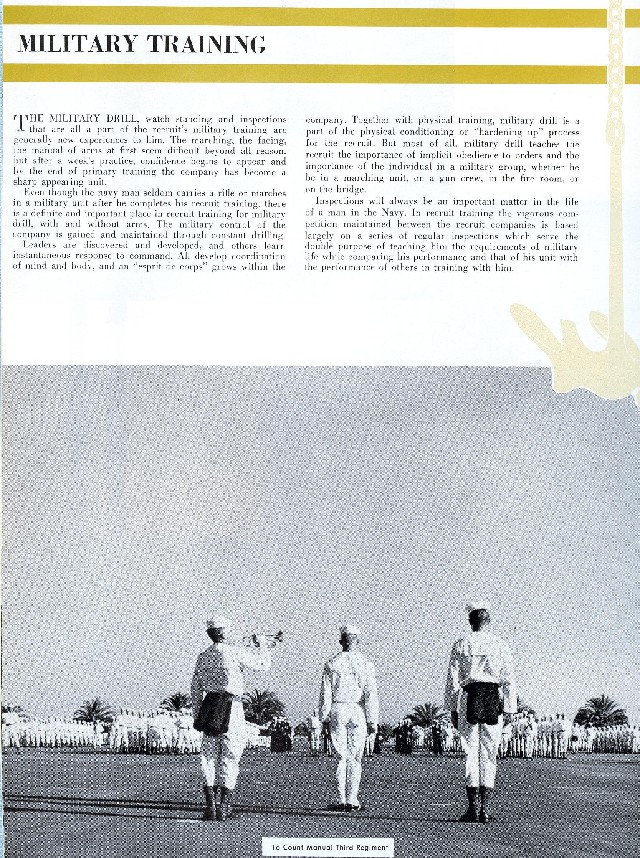
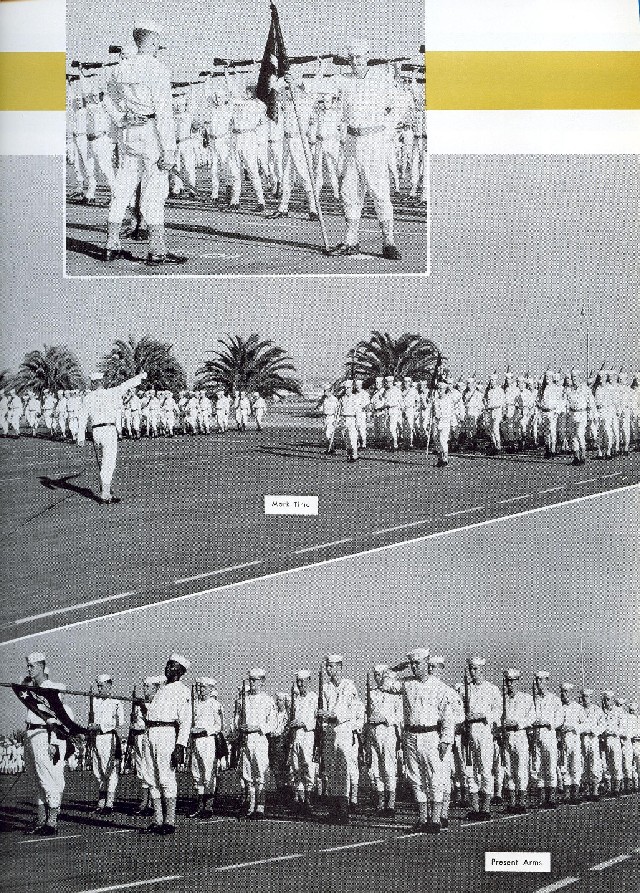
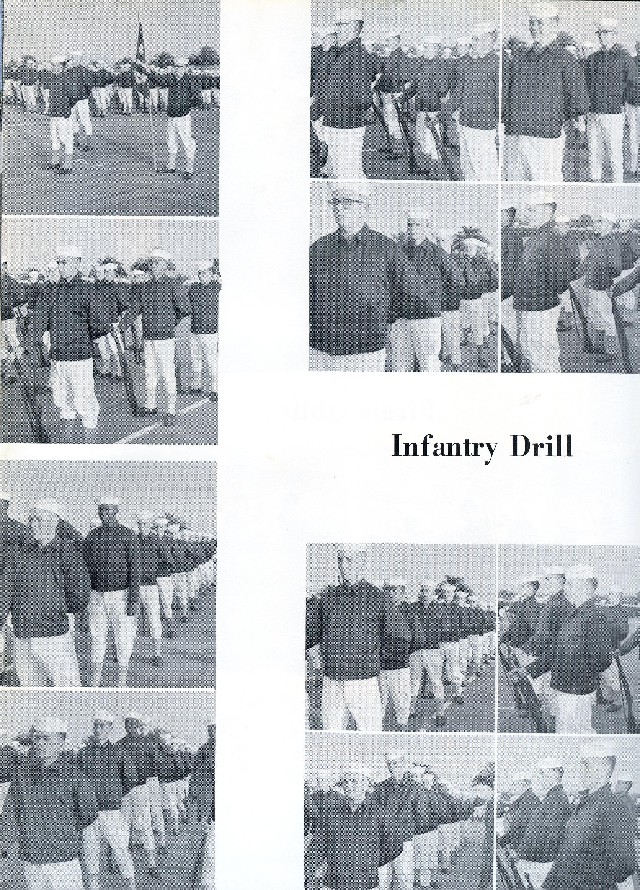
THE MILITARY DRILL WATCH STANDING and inspections that are all a part of the recruit's military training are generally a new experiences to him. The marching, the facing, the manual of arms at first seem difficult beyond all reason, but after a week's practice, confidence begins to appear and by the end of primary training the company has become a sharp appearing unit. Even though the navy man seldom carries a rifle or marches in a military unit after he completes his recruit training, there is a definite and important place in recruit training for military drill, with and without arms. The military control of the company is gained and maintained through constant drilling. Leaders are discovered and developed, and others learn instantaneous response to command. All develop coordination of mind and body, and an "esprit de corps" grows within the company. Together with physical training, military drill is a part of the physical conditioning or "hardening up" process for the recruit. But most of all, military drill teaches the recruit the importance of implicit obedience to orders and the importance of the individual in a military group, whether he be in a marching unit, on a gun crew, in the fire room, or on the bridge. Inspections will always be an important matter in the life of a man in the Navy. In recruit training the vigorous competition maintained between the recruit companies is based largely on a series of regular inspections which serve the double purpose of teaching him the requirements of military life while comparing his performance and that of his unit with the performance of others in training with him.
History
Marching
History
Drill with Arms
History
Marching
History
Primary Training
Physical
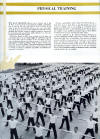
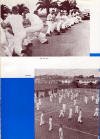
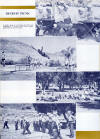
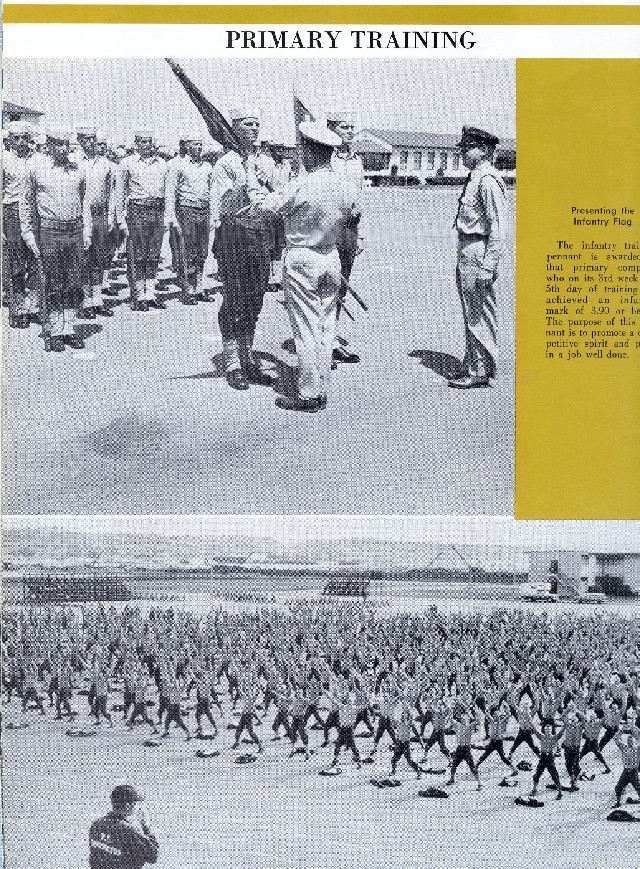
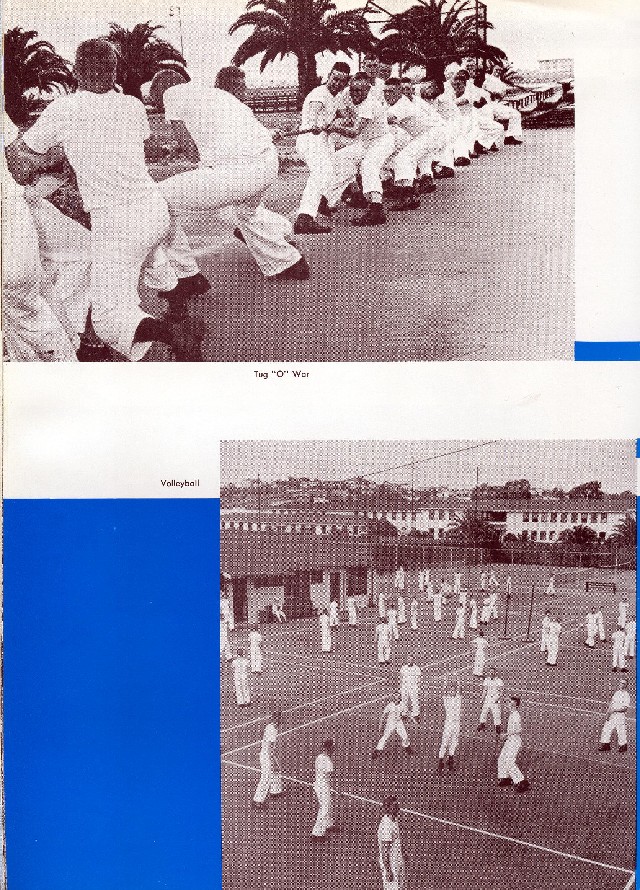
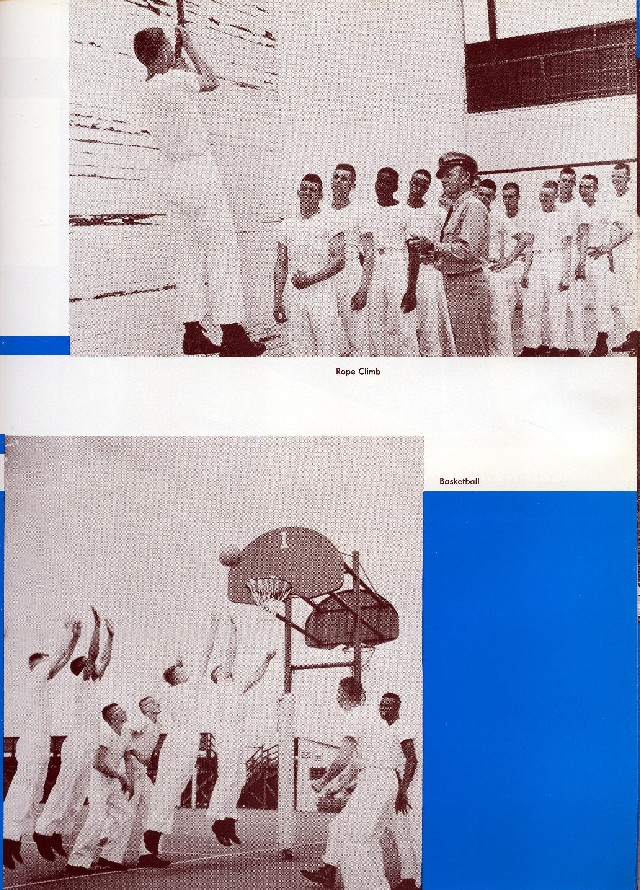
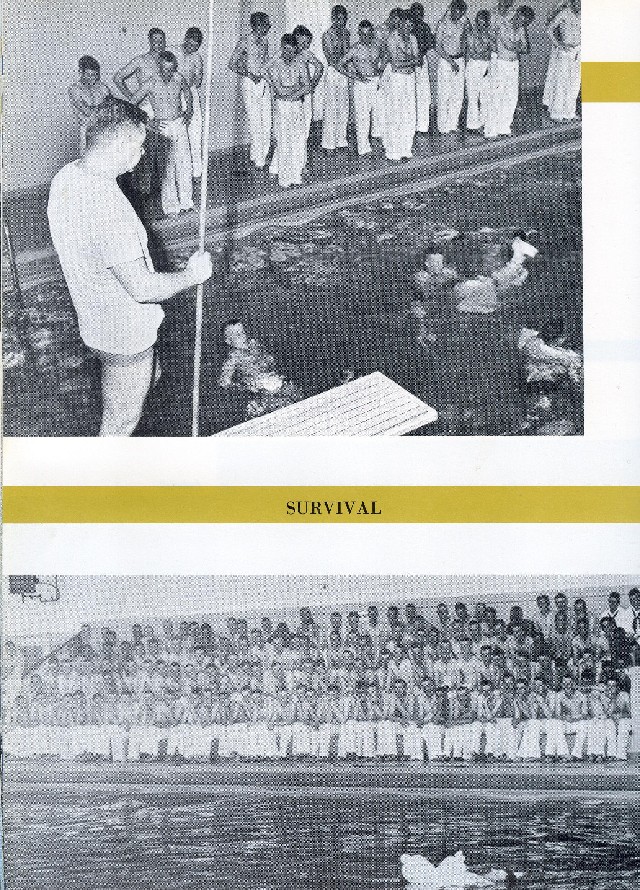
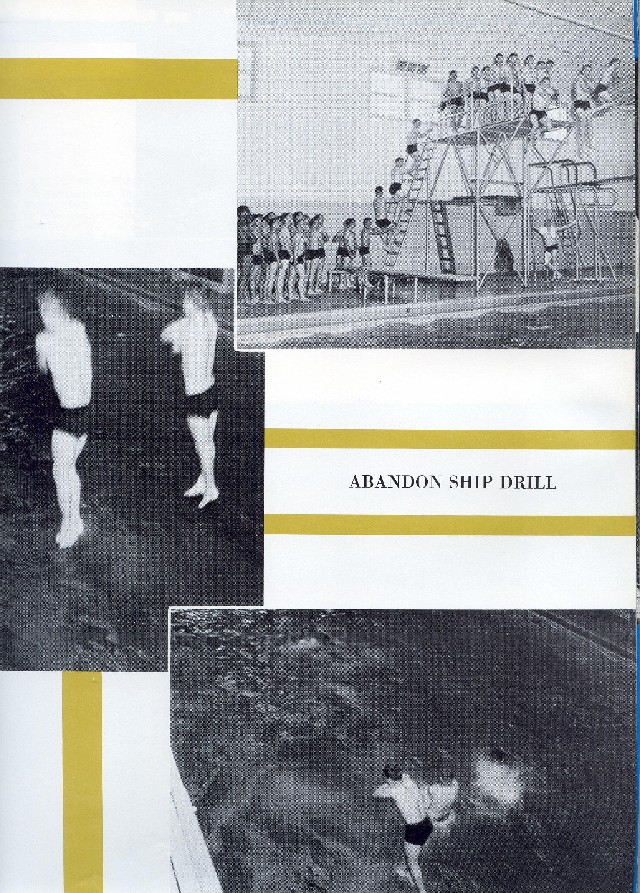
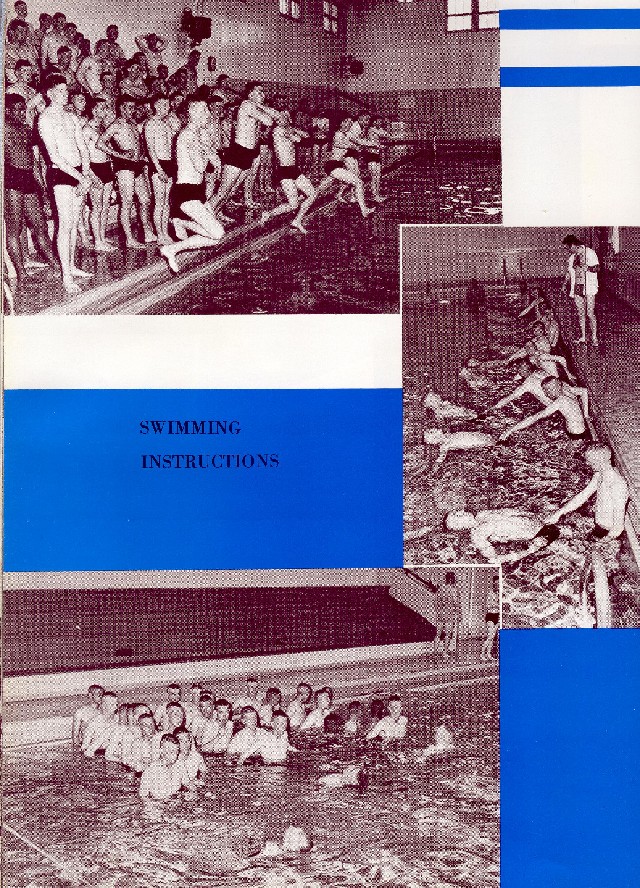
Physical Training TO BE OF MAXIMUM effective use to himself and to the Navy a man must be in top physical condition, must know how to care for his body and must be able to survive in the water at sea. To the end that all navy men may meet these demands of naval service, they participate in a physical training program that involves strenuous physical exertion, instruction in swimming and sea survival, and instruction in first aid, lifesaving and personal hygiene. When they report for duty some recruits are soft, some are overweight, and some are underweight. To build some up and trim others down, and to condition all for the rigors of life at sea, a well-planned physical training program is integrated with other phases of training: military drill, an active outdoor life, good food. good living habits. These physical training activities emphasize correct posture and muscular coordination and strive to develop a respect for authority and habits of instantaneous response to commands. All men - particularly sailors whose life will be the sea must know how to swim, how to use life jackets and, if no jacket is available, how to use clothing as a flotation device. Many hours are spent in the swimming pools, Non-swimmers are taught to swim, qualified swimmers improve their ability, and all recruits learn sea survival and water safety. Stressed constantly in the Physical Training Program is personal cleanliness and the importance of health to the individual and to the Navy. A knowledge of the medical and dental services available, the prevention of infections, correct eating habits, and the care of feet, mouth, and teeth is provided by competent medical instructors. The recruit also receives first aid instruction so that he will know how to care for himself or for his injured shipmates under circumstances where immediate medical attention is not available.
History
Volleyball
History
Rope Climb/Basketball
History
Survival
History
Abandon Ship
History
Swimming Instructions
History
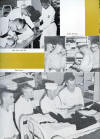
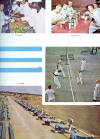
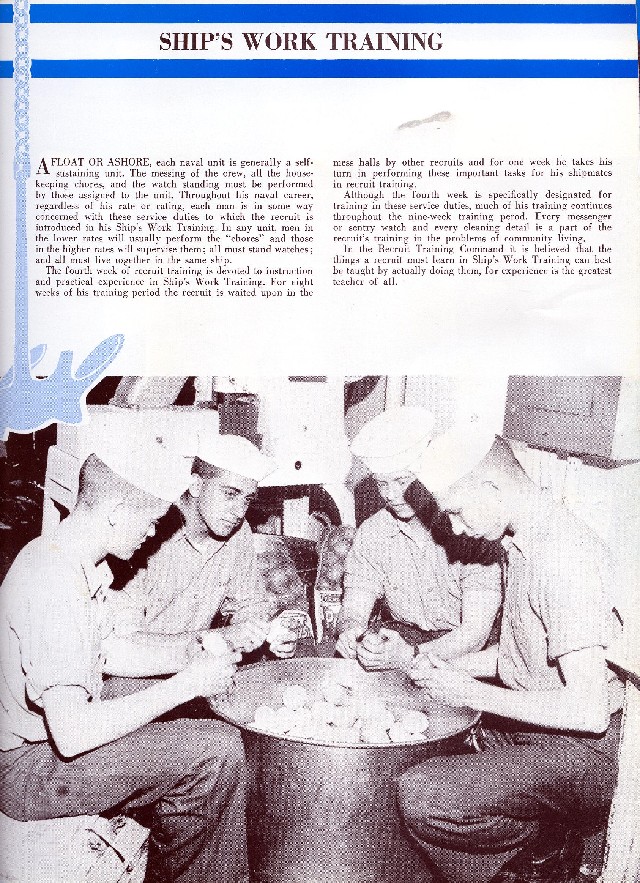
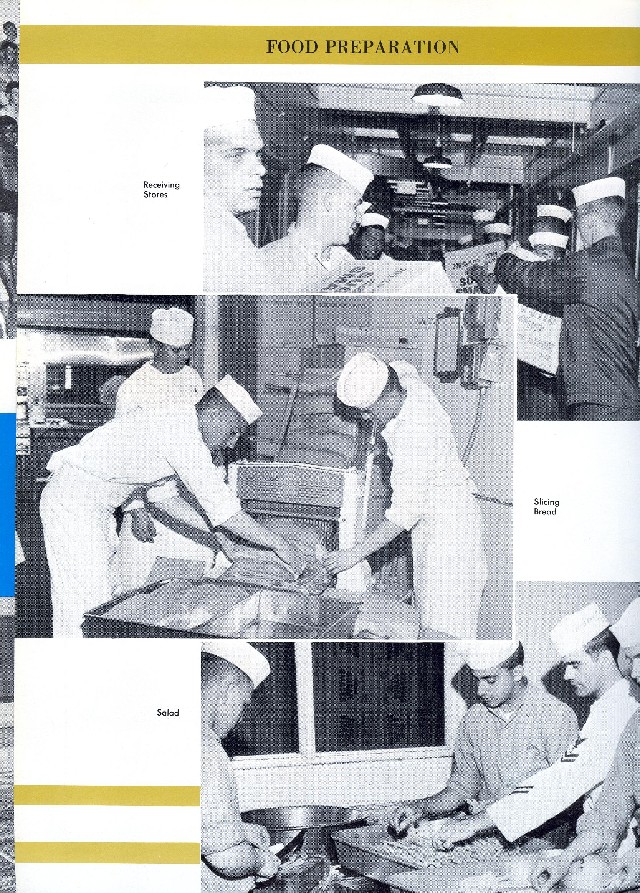
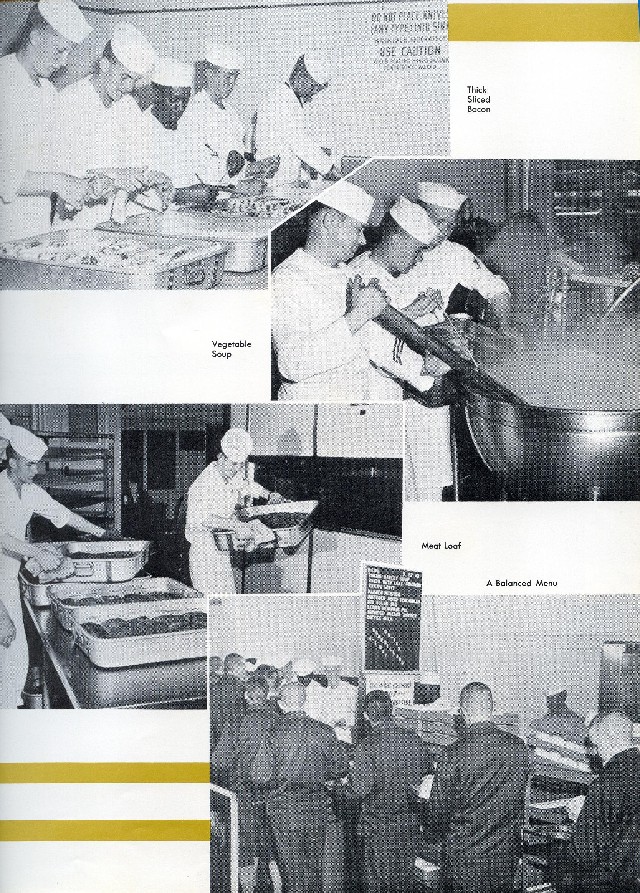
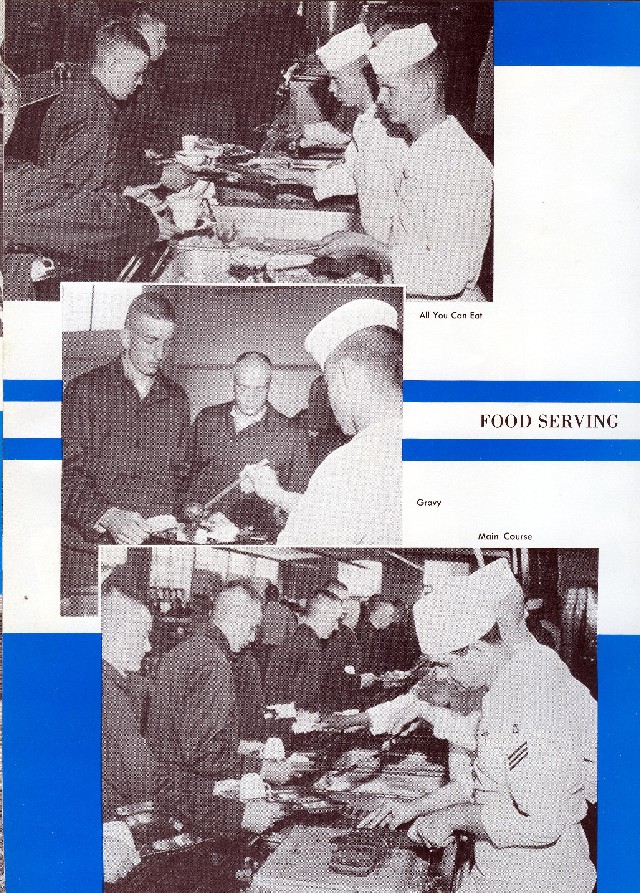
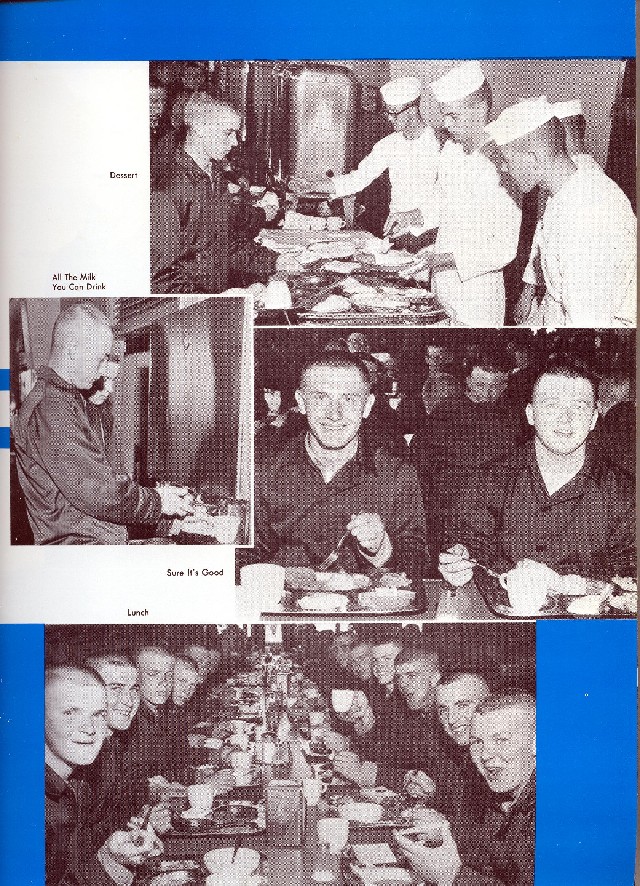
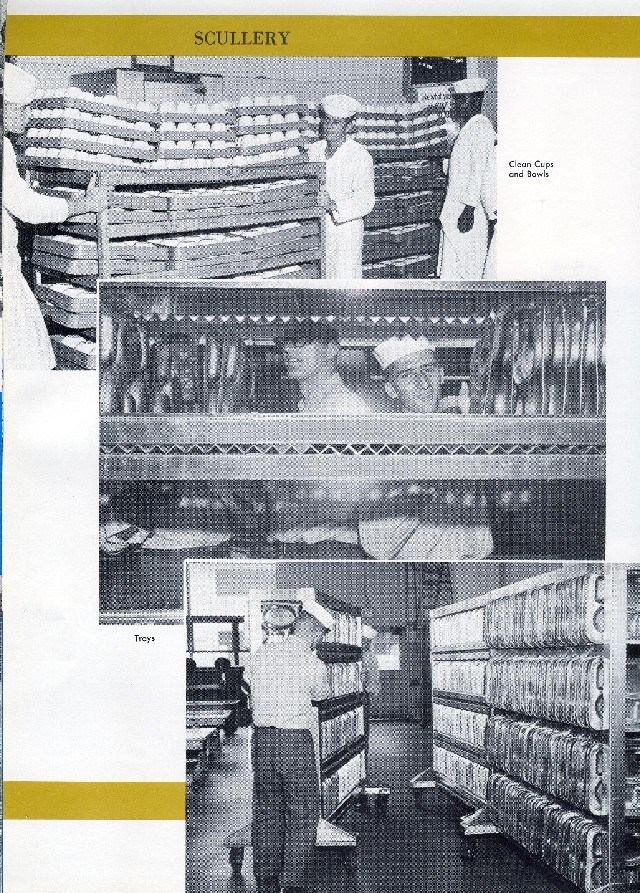
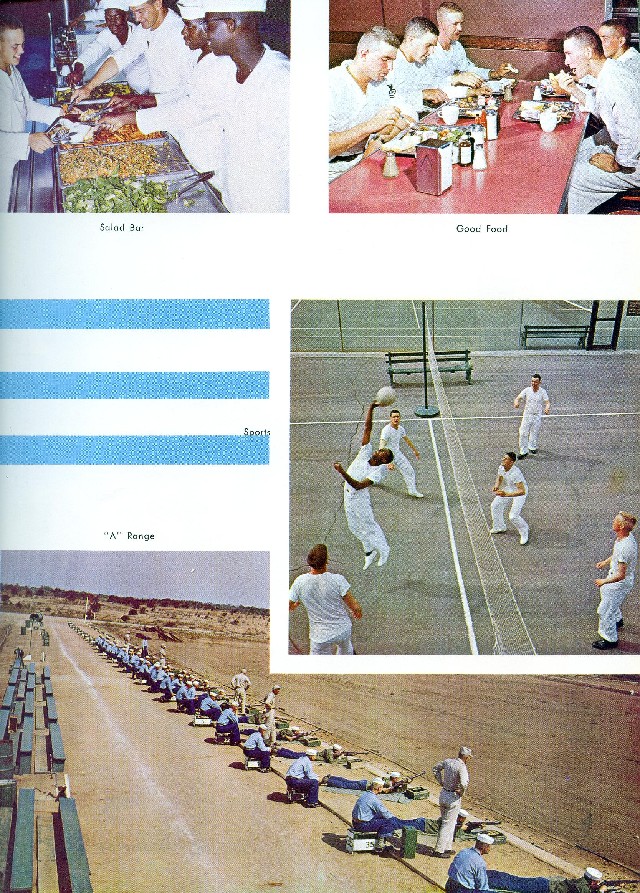
SHIPS WORK TRAINING AFLOAT OR ASHORE, each naval unit is generally a self-sustaining unit. The messing of the crew, all the house- keeping chores, and the watch standing must be performed by those assigned to the unit. Throughout his naval career, regardless of his rate or rating, each man is in some way concerned with these service duties to which the recruit is introduced in his Ship's Work Training. In any unit, men in the lower rates will usually perform the "chores" and those in the higher rates will supervise them; all must stand watches; and all must live together in the same ship. The fourth week of recruit training is devoted to instruction and practical experience in Ship's Work Training. For eight weeks of his training period the recruit is waited upon in the mess halls by other recruits and for one week he takes his turn in performing these important tasks for his shipmates in recruit training. Although the fourth week is specifically designated for training in these service duties, much of his training continues throughout the nine-week training period. Every messenger or sentry watch and every cleaning detail is a part of the recruit's training in the problems of community living. In the Recruit Training Command it is believed that the things a recruit must learn in Ship's Work Training can best be taught by actually doing them, for experience is the greatest teacher of all.
History
Food Preparation
History
Balanced Meal
History
Food Serving
History
Lunch
History
Scullery
History
Gear Locker
History
Field Day
Barricks
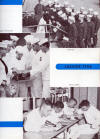
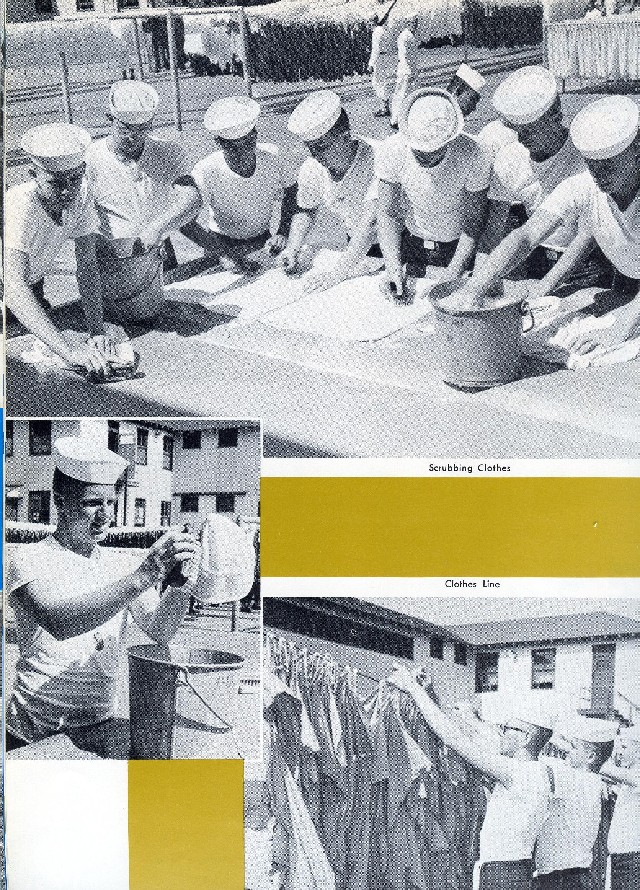
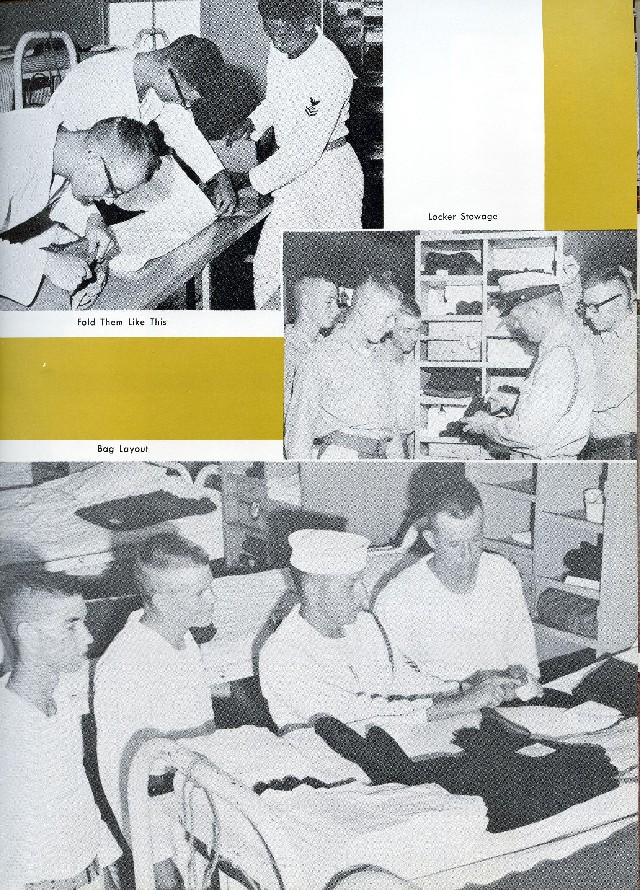
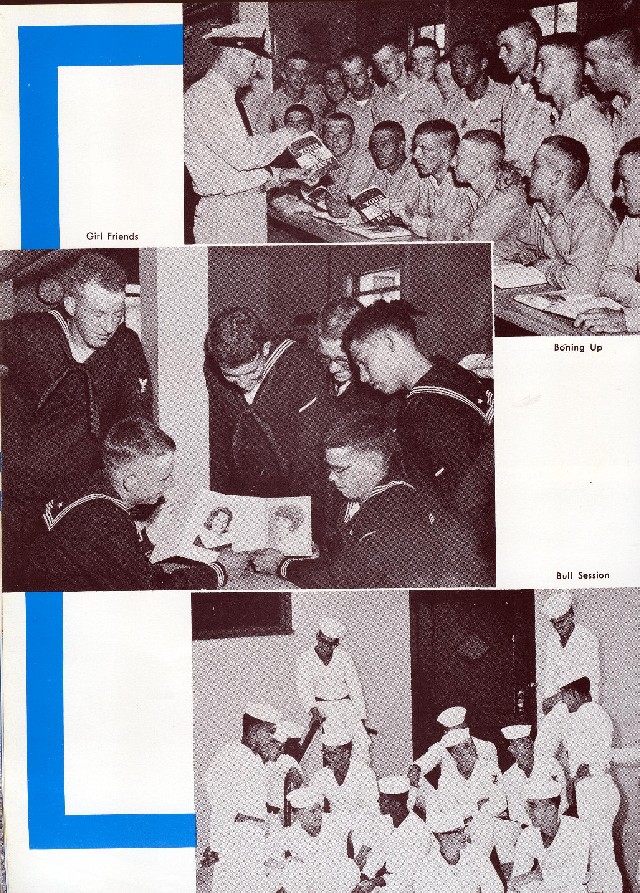
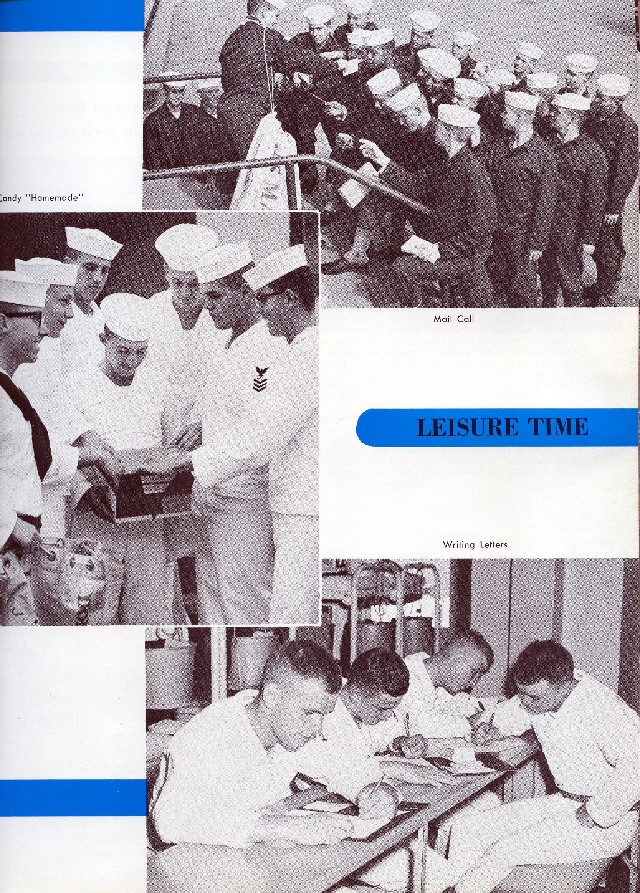
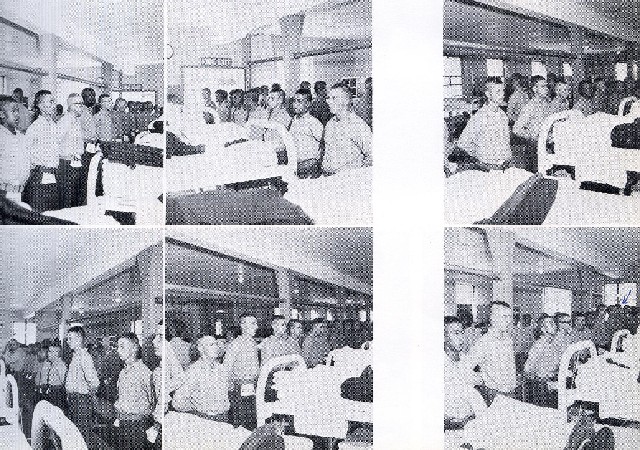
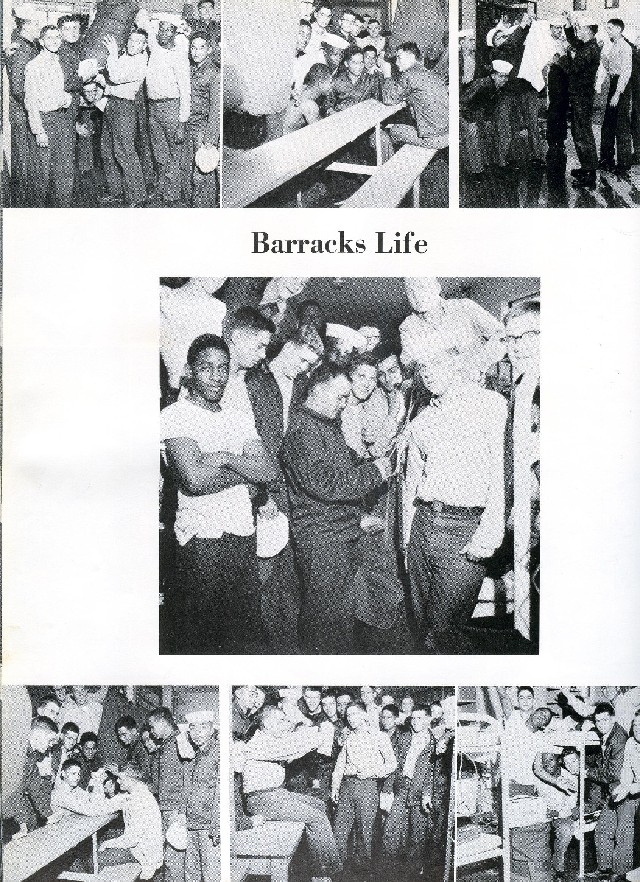
BARRICKS LIFE PROBABLY THE MOST IMPORTANT thing that a recruit must learn during his recruit training is how to live with others in a military organization. Life and living conditions in the Navy differ so greatly from anything the young man has known in civilian life that teaching him to live in close quarters as a member of a military group becomes one of the major missions of recruit training. At the Training Center his barracks is the recruit's "home." It is in his barracks that he spends an appreciable portion of his time in training. Here he establishes himself-in a sense, drops his anchor- for the nine weeks in which he will be experiencing the transition from civilian to military life. The barracks is not only a place for the recruit to sleep; it is his most important classroom. Here he "learns by doing." He learns to live with others and to take care of himself and his belongings. The scrubbing of his clothing, the cleaning of his barracks, and the constant inspections all serve but one purpose; to prepare him for a successful life during the remainder of his tour in the Navy. And it is not all work, for the recruit must also learn the need of a Navy man for the companionship of his fellows, for mail from home, and for amusement and relaxation. He should also develop the habits of writing letters and budgeting his spare time. These things he learns in his barracks life at the Training Center.
History
Scrubbing Clothes
History
Bag Layout
History
Bull Session
History
Leisure Time
History
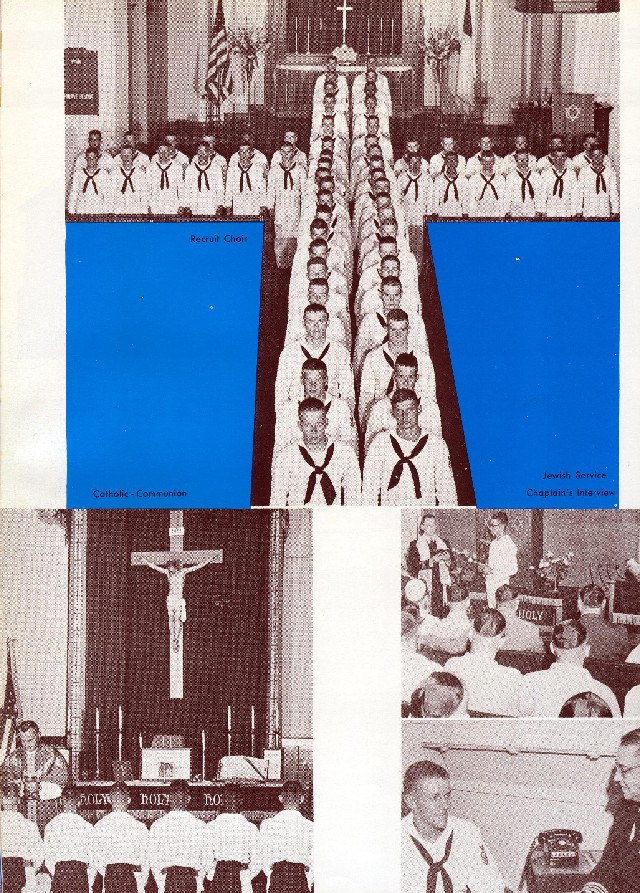
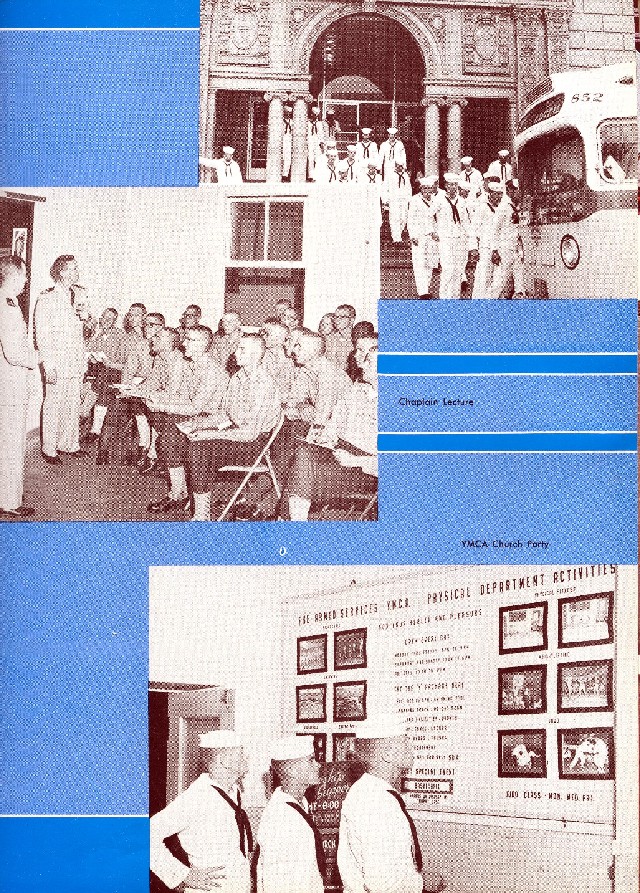
Religious Life IN MAKING THE CHANGE from civilian to military life, the recruit does not leave behind the religious beliefs which he learned at home. Instead, he is given every opportunity and encouragement to maintain and strengthen his religious interests. Soon after his arrival, the recruit is given an opportunity talk to a chaplain of his own faith, who will acquaint him with the chaplain's role in the command and will explain the religious programs which will be available to him during recruit training. Regular divine services are conducted by chaplains of all faiths, thus giving each man an opportunity to worship in accordance with his religious background. Voluntary classes of religious instruction are held regularly for the benefit of recruits who desire to prepare themselves for church membership. The chaplains cooperate closely with the local churches to facilitate membership or attendance at services in those churches. Character guidance talks given by the chaplains are an integral part of recruit training. These are designed to foster the growth of moral responsibility, spiritual values and strong self-discipline within the recruit. Recruits are encouraged to participate in the religious life of the station by joining the choir or providing musical accompaniment at divine services. In time of distress or personal emergency, the chaplains stand ready to give advice and counsel, and the recruit encouraged to take his personal problems to a chaplain his choice at any time. The chaplains also maintain close contact with the Navy Relief Society and The American Red Cross in obtaining financial and other assistance to those in need.
History
Recruit Choir
History
YMCA Party
History
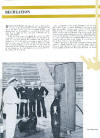
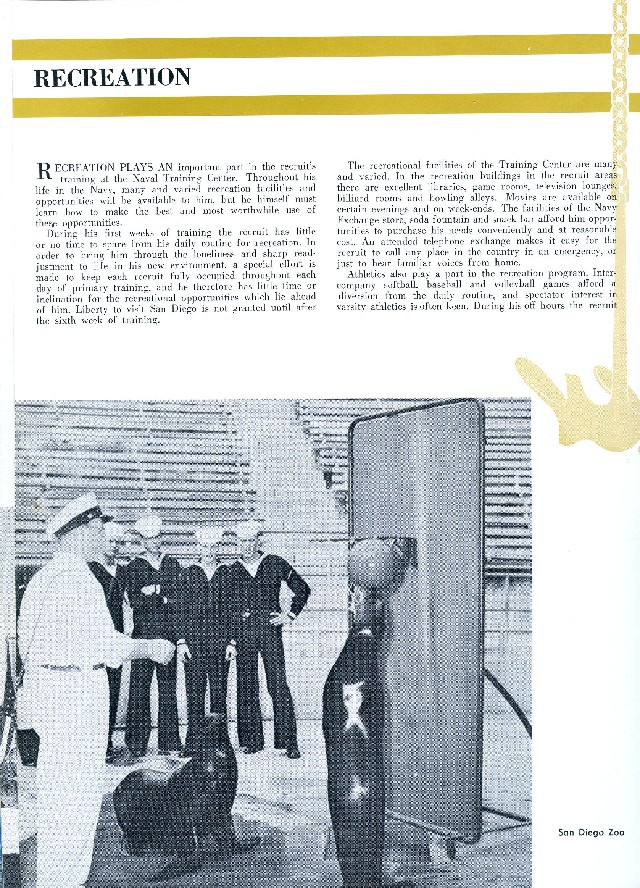
Recreation
History
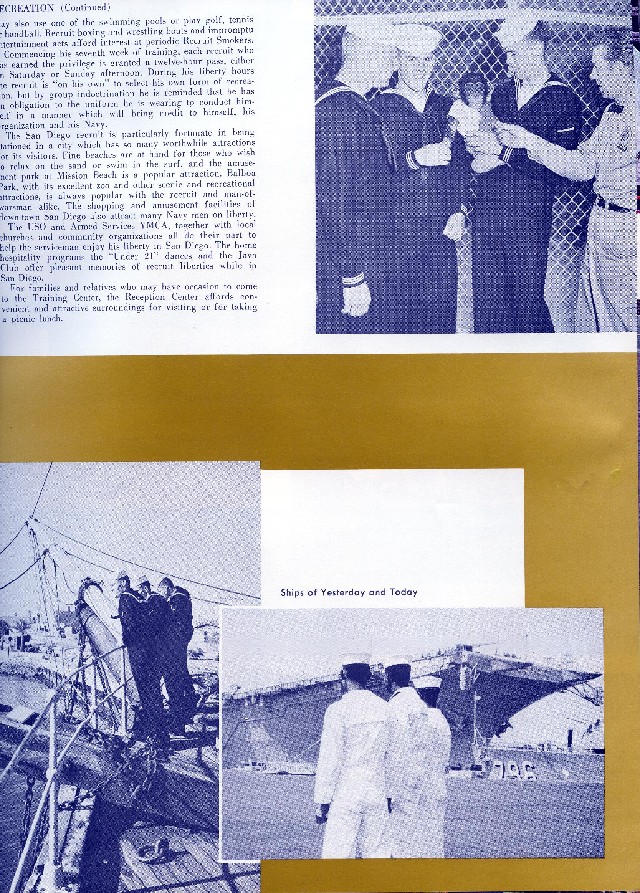
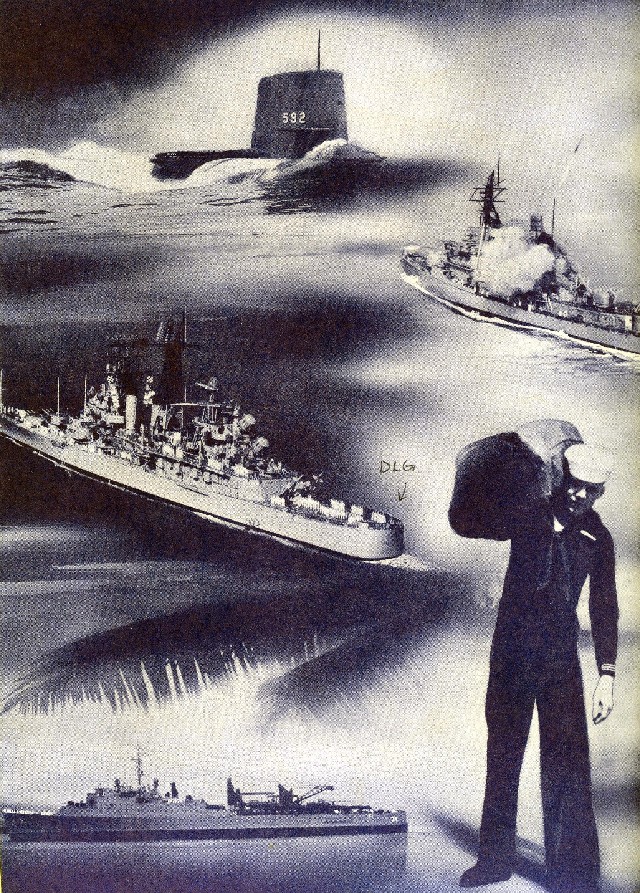
Ships of Yesterday and Today
History
Firefighting
History
Food
History
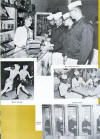
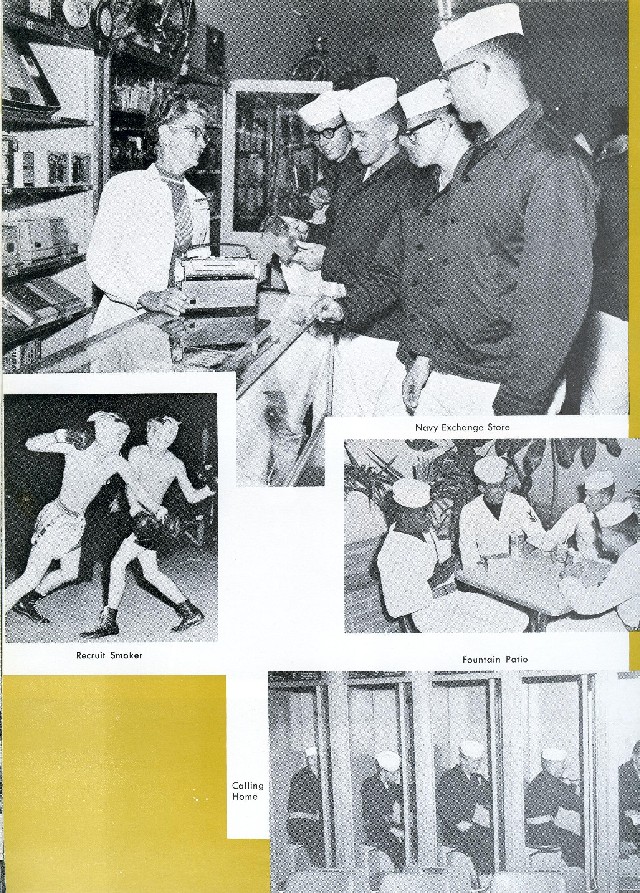
Navy Exchange
History
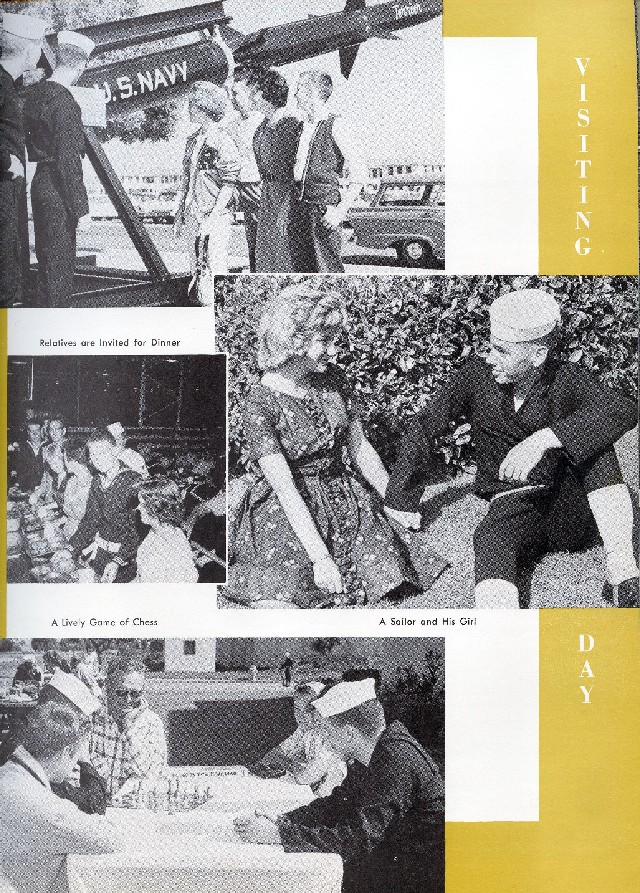
Visiting Day
History
Morning Class
History
Drill Training
History
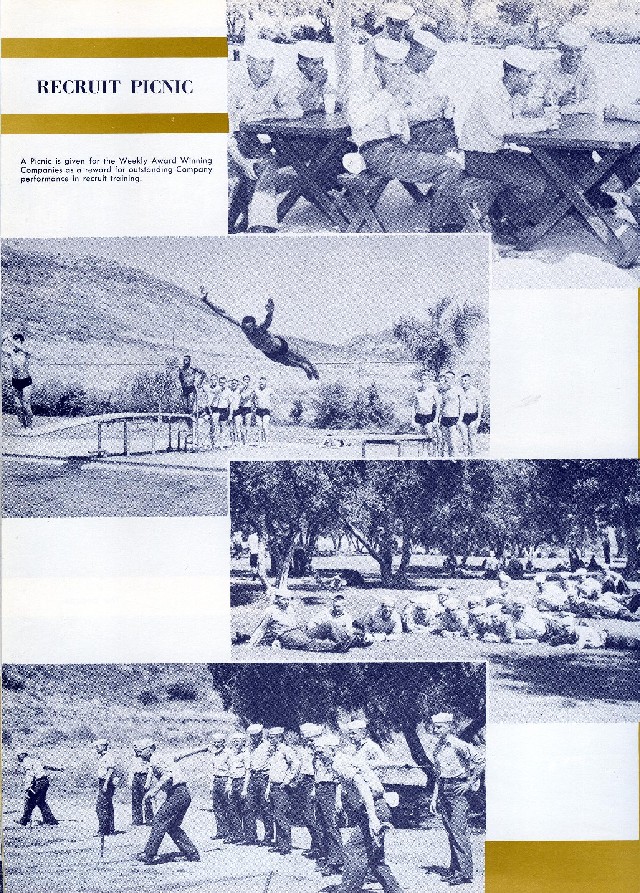
Recruit Picnic
History
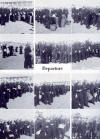
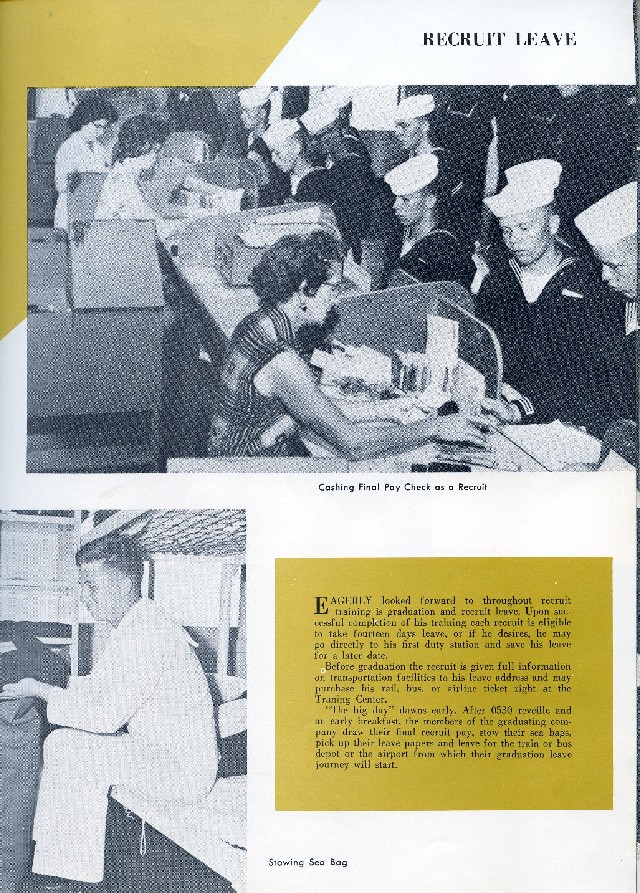
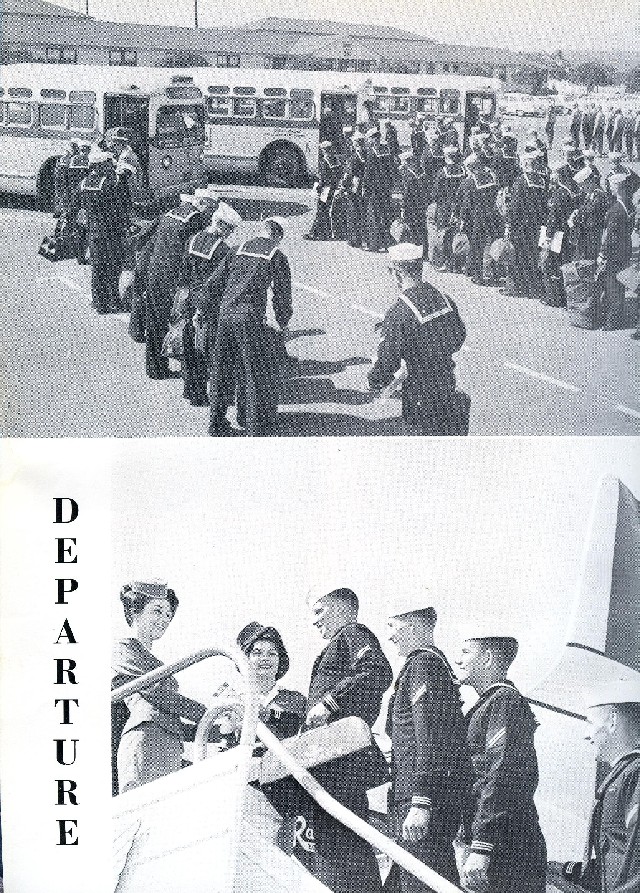
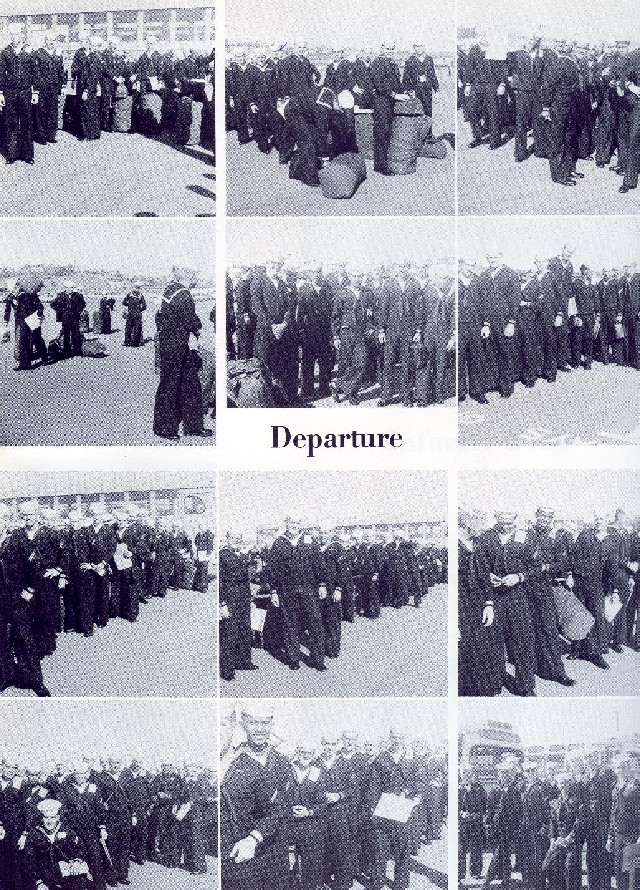
Recruit Leave EAGERLY looked forward to throughout recruit training is graduation and recruit leave. Upon successful completion of his training each recruit is eligible to take fourteen days leave, or if he desires, he may go directly to his first duty station and save his leave for a later date. Before graduation the recruit is given full information on transportation facilities to his leave address and may purchase his rail, bus, or airline ticket right at the Training Center. "The big day" dawns early. After 0530 reveille and an early breakfast, the members of the graduating company draw their final recruit pay, stow their sea bags, pick up their leave papers and leave for the train or bus depot or the airport from which their graduation leave journey will start.
History
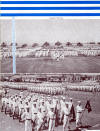
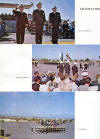
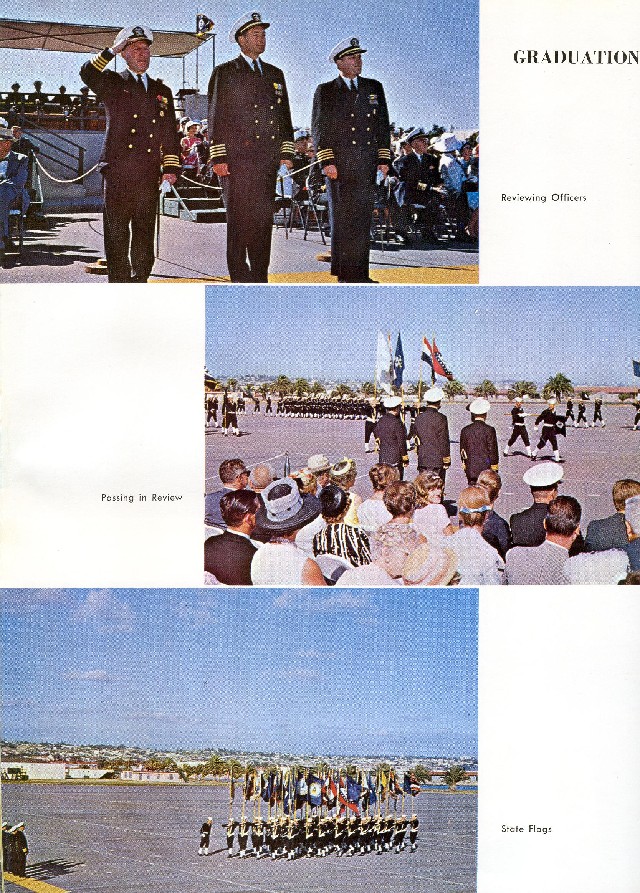
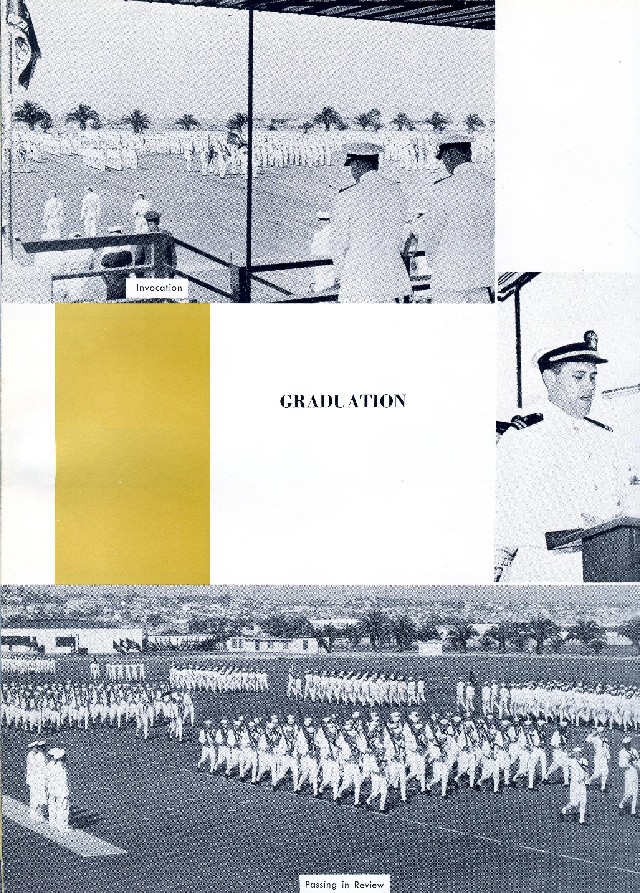
Graduation
History
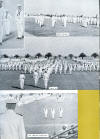
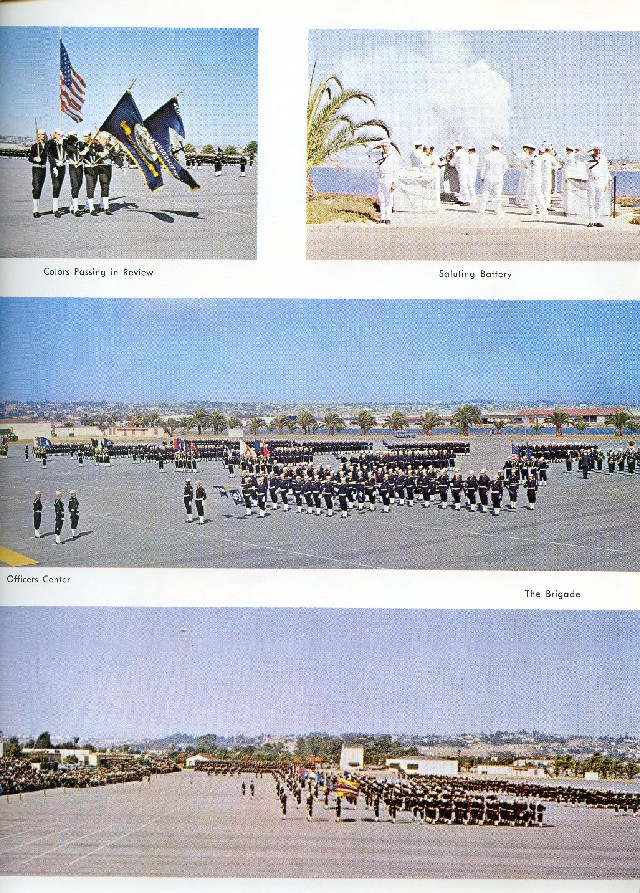
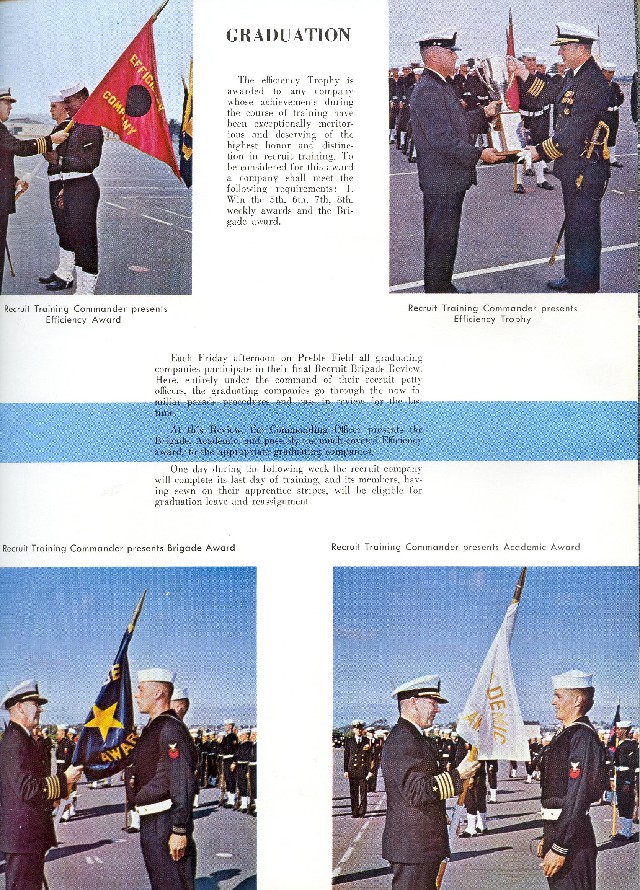
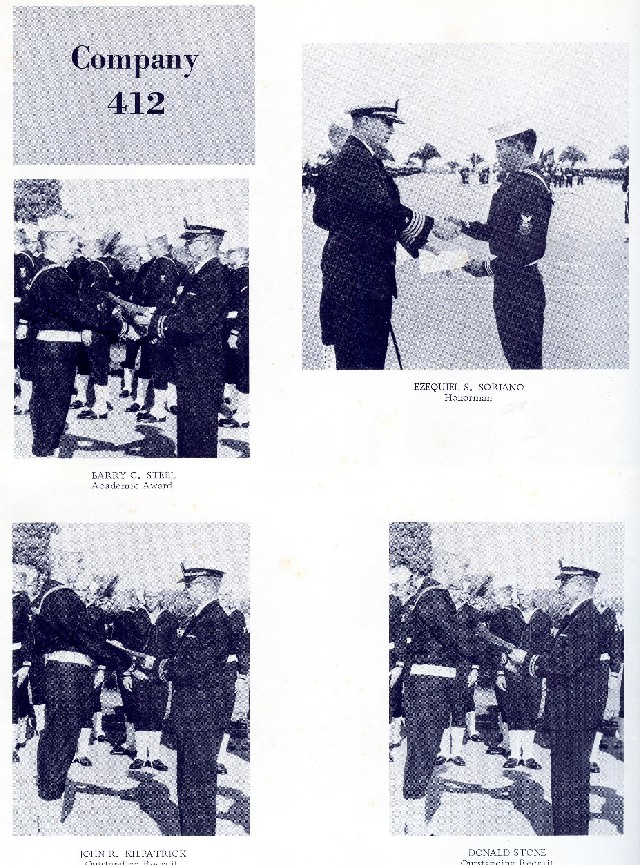
Graduation Awards Each Friday afternoon on Preble Field all graduating companies participate in their final Recruit Brigade Review. Here, entirely under the command of their recruit petty officers, the graduating companies go through the now familiar parade procedures and pass in review for the last time. At this Review, the Commanding Officer presents the Brigade, Academic, and possibly the much coveted Efficiency award, to the appropriate graduating companies. One day during the following week the recruit company will complete its last day of training, and its members, having sewn on their apprentice stripes, will be eligible for graduation leave and reassignment. The efficiency Trophy is awarded to any company whose achievements during the course of training have been exceptionally meritorious and deserving of the highest honor and distinction in recruit training. To be considered for this award a company shall meet the following requirements: 1. Win the 5th, 6th, 7th, 8th, weekly awards and the Brigade award.
History
Passing in Review
History
REEE-PORT
History
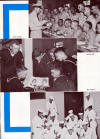
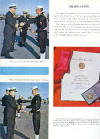
Graduation Honors This medal and certificate is awarded by the Citizens Committee for the Army, Navy, and Air Force, Incorporated. One such award is presented each week to personnel who are completing basic training in the four services of the Department of Defense. The recipient is selected from the honor men and Apprentice Chief Petty Officers of all graduating companies and is that recruit who has best demonstrated those qualities of leadership which express the American spirit, namely-honor, initiative, loyalty, and high example to comrades-in-arms.
History
Presentation of the American Spirit Honor Metal.
History
Recruit Training Commander presents Honor Certificates.
`
History
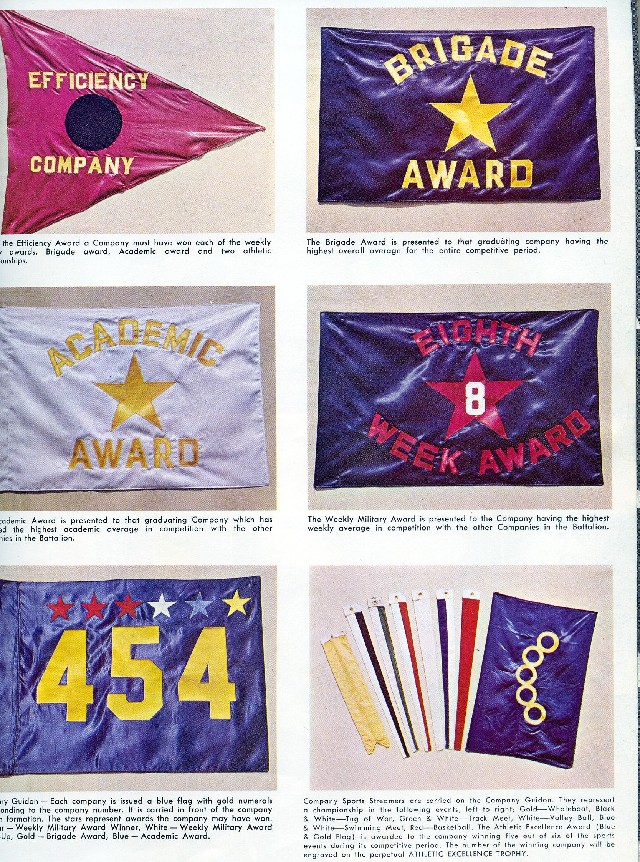
Efficiency Award To win this award a Company must have won each of the weekly military awards, Brigade award, Academic award and two athletic championships.
History
Brigade Award This is presented to that graduating company having the highest overall average for the entire competitive period.
History
Academic Award This award is presented to that graduating Company which has achieved the highest academic average in competition with the other companies in the Battalion.
History
The Weekly Military Award It is presented to the Company having the highest weekly average in competition with the other Companies in the Battalion.
History
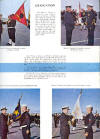
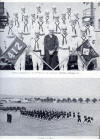
Company Guidon Each company is issued a blue flag with gold numerals corresponding to the company number. It is carried in front of the company when in formation. The stars represent awards the company may have won. Red star-Weekly Military Award Winner, White - Weekly Military Award Runner-Up, Gold- Brigade Award, Blue - Academic Award.
History
Company Sports Streamer These are carried on the Company Guidon. They represent a championship in the following events, left to right; Gold-Whaleboat, Black & White-Tug of War, Green & White-Track Meet, White-Volley Ball, Blue & White-Swimming Meet, Red-Basketball. The Athletic Excellence Award (Blue & Gold Flag) is awarded to the company winning five out of six of the sports events during its competitive period. The number of the winning company will be engraved on the perpetual ATHLETIC EXCELLENCE TROPHY
History
Departure
Company 63-412 Section
Gottshalk
K. W. Gottshalk, EN1 Company Commander
Spencer
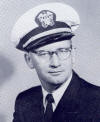
LTJG R.R. Spencer Battalion Commander
RECRUIT NAME
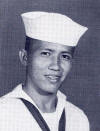
Ezequel S. Soriano Recruit Chief Petty Officer, Honorman
RECRUIT NAME
Adiao, Armando A. Philippines
RECRUIT NAME
Ballinger, Don E. Canby,OR
RECRUIT NAME
Boswell, Ernest C. Berwyn Heights, MD.
RECRUIT NAME
Cain, Robert R. Durham, NC
RECRUIT NAME
Carneal, Paul E. La Puente, CA
RECRUIT NAME
Cox, Russell L. Seward, NE
RECRUIT NAME
Cribb, Ulmer W. Hemingway, SC
RECRUIT NAME
Cruit, Robert D. Hastings, NE
RECRUIT NAME
Cunningham, Don D. Sutherlin, OR.
RECRUIT NAME
DeVlieger, Richard C. Chicago, IL.
RECRUIT NAME
Duke, Samuel B. Randolph, AL.
RECRUIT NAME
East, William R. Pascagoula, MS.
RECRUIT NAME
Edwards, Elwood Jr. Bladenboro, NC.
RECRUIT NAME
Faust, Robert W. Goldendale, WA.
RECRUIT NAME
Gante, Vicente D. Philippines
RECRUIT NAME
Guild, Wayne A. Canby, OR.
RECRUIT NAME
Gulley, R. A. Gallatin, TN.
RECRUIT NAME
Hand, Nicolas H. Norfolk, VA.
RECRUIT NAME
Harger, John J. Jr. Santa Cruz, CA.
RECRUIT NAME
Henderson, Michael S. Tuscaloosa, AL.
RECRUIT NAME
Hininger, Delmar W. Jr. Bonner Springs, KS.
RECRUIT NAME
Jacinto, Jessie S. Philippines
RECRUIT NAME
Johnson, James J. Elmhurst, IL.
RECRUIT NAME
Jones, Leslie J. Fairfield, AL.
RECRUIT NAME
Kaylor, James L. Odessa, MO.
RECRUIT NAME
Kemple, Joel P. Alameda, CA.
RECRUIT NAME
Knighton, Drew M. Marion, NC.
RECRUIT NAME
Laney, Colvin C. Bishopville, SC.
RECRUIT NAME
Lang, Warren M. Oregon City, OR.
RECRUIT NAME
Larkin, Joseph F. Bordentown, NJ.
RECRUIT NAME
Laughead, Laurence T. Alexis, IL.
RECRUIT NAME
Lawhorn, Thomas E. Minden, WV.
RECRUIT NAME
Lechner, Ronald T. Redding, CA.
RECRUIT NAME
Lombardi, Philip A. Elmhurst, IL.
RECRUIT NAME
Meadows, Clarence L. Elk City, KS.
RECRUIT NAME
Miles, James B. Washington, D. C
RECRUIT NAME
Mineer, Boyd G. Globe, AZ.
RECRUIT NAME
Monteleone, Barney J. Jr. Mobile, AL.
RECRUIT NAME
Nelson, Jimmy Dallas, TX.
RECRUIT NAME
Page, Danny A. Sparta, TN.
RECRUIT NAME
Pettinger, Ronald L. Marine City, MI.
RECRUIT NAME
Porter, Charles E. Marianna, FL.
RECRUIT NAME
Prazeau, Michael F. Portland, OR.
RECRUIT NAME
Quick, Glenn A. III Lawton, OK.
RECRUIT NAME
Reyes, Feliciano B. Philippines
RECRUIT NAME
Riley, James E. Goldendale, WA.
RECRUIT NAME
Robertson, Kenneth W. Chesterhill, OH.
RECRUIT NAME
Ros, Guillermo D. Philippines
RECRUIT NAME
Sacuyap, Dionisio G. Jr. Philippines
RECRUIT NAME
See, Robert R. Spokane, WA.
RECRUIT NAME
Seeley, Ronald A. Trout Lake, WA
RECRUIT NAME
Shawver, William E. Fayetteville, WV.
RECRUIT NAME
Sims, Richard Argo, IL.
RECRUIT NAME
Smith, Leslie R. Goldendale, WA.
RECRUIT NAME
Sopher, Terry J. Sibley. MO
RECRUIT NAME
Steel, Barry C. Baltimore, MD.
RECRUIT NAME
Stone, Donald N. Goldendale, WA.
RECRUIT NAME
Stovall, John L. III Durham, NC.
RECRUIT NAME
Tabares, Eleuterio L. Philippines
RECRUIT NAME
Thompson, Robert E. Maryhill, WA
RECRUIT NAME
Thompson, William R. Goldendale, WA
RECRUIT NAME
Tolentino, Melencio P. Jr. Philippines
RECRUIT NAME
Tugade, Antonio J. Philippines
RECRUIT NAME
Uy, Enrique L. Philippines
RECRUIT NAME
Vanlandingham, Nathaniel Baltimore, MD
RECRUIT NAME
Vergara, Renato T. Philippines
RECRUIT NAME
Waje, Armando D. Philippines
RECRUIT NAME
Walters, Jerry J. Kansas City, KS
RECRUIT NAME
Wards, George C. Newport, WA
RECRUIT NAME
Wills, Roland S. Baltimore, MD
RECRUIT NAME
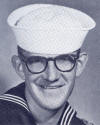
Withers, Dan L. Salem, OR
RECRUIT NAME
Wright, T. I. Jr. Baltimore, MD
RECRUIT NAME
Bag Inspections
RECRUIT NAME
Barricks Life
RECRUIT NAME
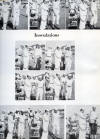
Inoculations
RECRUIT NAME
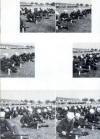
Handling your piece.
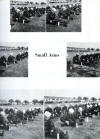
Small Arms
Small Arms
RECRUIT NAME
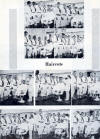
Haircuts
RECRUIT NAME
Fire Fighting
RECRUIT NAME
Infantry Drill
RECRUIT NAME
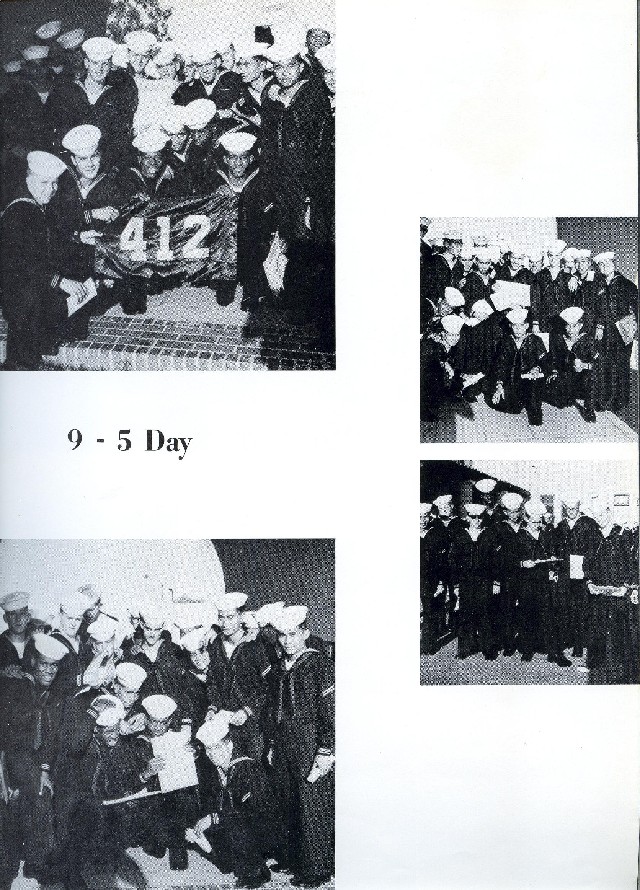
9-5 Day
RECRUIT NAME
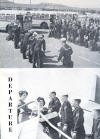
Departure
RECRUIT NAME
Passing In Review
RECRUIT NAME
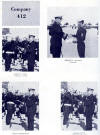
Company - 412
RECRUIT NAME
Publisher Info